Introduction
In Singapore’s humid climate, waterproofing isn’t a luxury — it’s a necessity. Whether you live in an HDB flat, condominium, or landed property, waterproofing protects your home from leaks, mould, and structural damage. Yet, even the best waterproofing systems can fail if not installed or maintained properly.
Many homeowners only realise something’s wrong when ceiling stains appear or paint starts bubbling. By then, repairs can become costly and invasive. Understanding why waterproofing fails helps prevent those issues before they start.
Let’s explore the ten most common reasons waterproofing systems in Singapore homes break down — and how professionals like Leak Works identify and fix them effectively.
Singapore Context: The Hidden Enemy of Moisture
Singapore’s tropical environment presents a perfect storm for waterproofing challenges: heavy rainfall, high humidity, and constant temperature fluctuations. The combination of wet monsoon seasons and harsh sunlight accelerates the ageing of waterproof membranes, especially on exposed rooftops, balconies, and bathrooms.
Moreover, the country’s dense urban housing means that water intrusion from one unit can easily affect neighbouring ones — a common issue in multi-storey condominiums and HDB flats. For landed homes, garden walls and roof decks face hydrostatic pressure from soil moisture during rainy months.
This unique climate makes it critical to choose the right materials, application method, and maintenance routine.
Why Waterproofing Fails: Top 10 Root Causes
1. Poor Surface Preparation
Waterproofing starts with the base surface. If dirt, dust, or oil remains on the substrate, the membrane or coating won’t adhere properly.
Common mistakes include:
- Applying waterproofing over wet or uneven surfaces
- Skipping crack repairs before coating
- Neglecting primer application
Even the most advanced membrane can fail if the surface isn’t cleaned and prepared thoroughly.
2. Wrong Product Selection
Not all waterproofing products are created equal. Using the wrong type for your environment can lead to early breakdown.
Examples:
- Using interior-grade sealant for outdoor roofs
- Applying bituminous coating in high-temperature areas without UV protection
- Choosing cementitious coating for flexible joints that require elasticity
Professionals like Leak Works select systems based on the surface material, exposure, and expected movement of the structure.
3. Improper Application Technique
Even quality products fail when incorrectly applied. In Singapore, DIY waterproofing often leads to issues like uneven thickness or poor curing.
Typical errors:
- Applying a single coat instead of multiple layers
- Not allowing each layer to dry fully
- Overlapping membrane sheets poorly
Proper waterproofing requires skilled workmanship and adherence to manufacturer guidelines — something only trained applicators ensure.
4. Movement or Cracks in Structure
All buildings expand and contract due to temperature changes and ground movement. Without flexible membranes or reinforcement mesh, cracks allow water to seep through.
Signs:
- Hairline cracks near wall corners
- Water stains following structural lines
- Crumbling plaster over time
Flexible waterproofing systems or joint sealants are crucial for these high-stress zones.
5. Poor Drainage and Water Ponding
Flat roofs and balconies in Singapore often suffer from drainage issues. Standing water (ponding) speeds up membrane deterioration and eventually seeps through the concrete.
Causes include:
- Blocked outlets
- Poor slope design
- Inadequate drain placement
During professional inspection, specialists perform ponding tests to identify low spots before applying coatings.
6. UV and Weather Exposure
Singapore’s strong UV rays are unforgiving. Continuous sun exposure weakens certain coatings, causing them to harden, crack, or peel.
Symptoms:
- Faded or chalky waterproofing surface
- Brittle texture on top coat
- Leaks appearing after long dry seasons
UV-resistant membranes or reflective topcoats are recommended for long-term durability.
7. Incompatible Layering
Sometimes new waterproofing is applied over old systems without checking compatibility. The chemical reaction between materials can cause blistering or delamination.
Example:
Applying polyurethane coating over a bituminous layer can trap moisture and cause bubbling.
Professionals typically remove old coatings or use a bonding primer when layering systems.
8. Inadequate Curing Time
In a rush to complete renovation, contractors sometimes skip the full curing period. Waterproofing materials need time to dry and bond before exposure to water.
Result:
The membrane remains soft and weak, losing adhesion once rainwater hits.
In Singapore’s humidity, drying takes longer — so patience pays off.
9. Poor Detailing Around Joints and Penetrations
Most leaks begin not in open surfaces, but around edges, joints, and pipe penetrations. Without proper sealing or flashing installation, water finds its way in.
Critical weak points:
- Corners of balconies or planters
- Around plumbing pipes or electrical conduits
- Junctions between roof and parapet wall
Using reinforcement mesh or additional sealant layers around these areas prevents 90% of common leak cases.
10. Lack of Maintenance and Inspections
Even the best waterproofing needs upkeep. Over time, UV exposure, foot traffic, and natural wear cause microdamage.
Recommended routine:
- Visual inspection every 6 months
- Cleaning gutters and outlets
- Recoating every 4–6 years depending on system type
Regular checks extend the lifespan of your waterproofing and prevent costly leaks during Singapore’s monsoon season.
Summary Table: Top Causes & Solutions
| Cause | Symptom | Professional Solution |
|---|---|---|
| Poor Surface Prep | Peeling or bubbling membrane | Reclean, reapply with primer |
| Wrong Product Type | Cracks or discoloration | Replace with correct-grade system |
| Bad Application | Uneven coating | Recoat by trained applicator |
| Structural Movement | Crack-line leaks | Use flexible membrane / joint sealant |
| Water Ponding | Standing water | Re-slope and improve drainage |
| UV Damage | Brittleness or chalking | Apply UV-resistant topcoat |
| Layer Incompatibility | Blisters / delamination | Remove old layer or use primer |
| Short Curing | Early failure | Allow full drying before exposure |
| Poor Detailing | Leaks near joints | Reinforce corners and penetrations |
| No Maintenance | Recurrent leaks | Implement inspection schedule |
Professional Waterproofing Process in Singapore
| Step | Action | Tools / Materials |
|---|---|---|
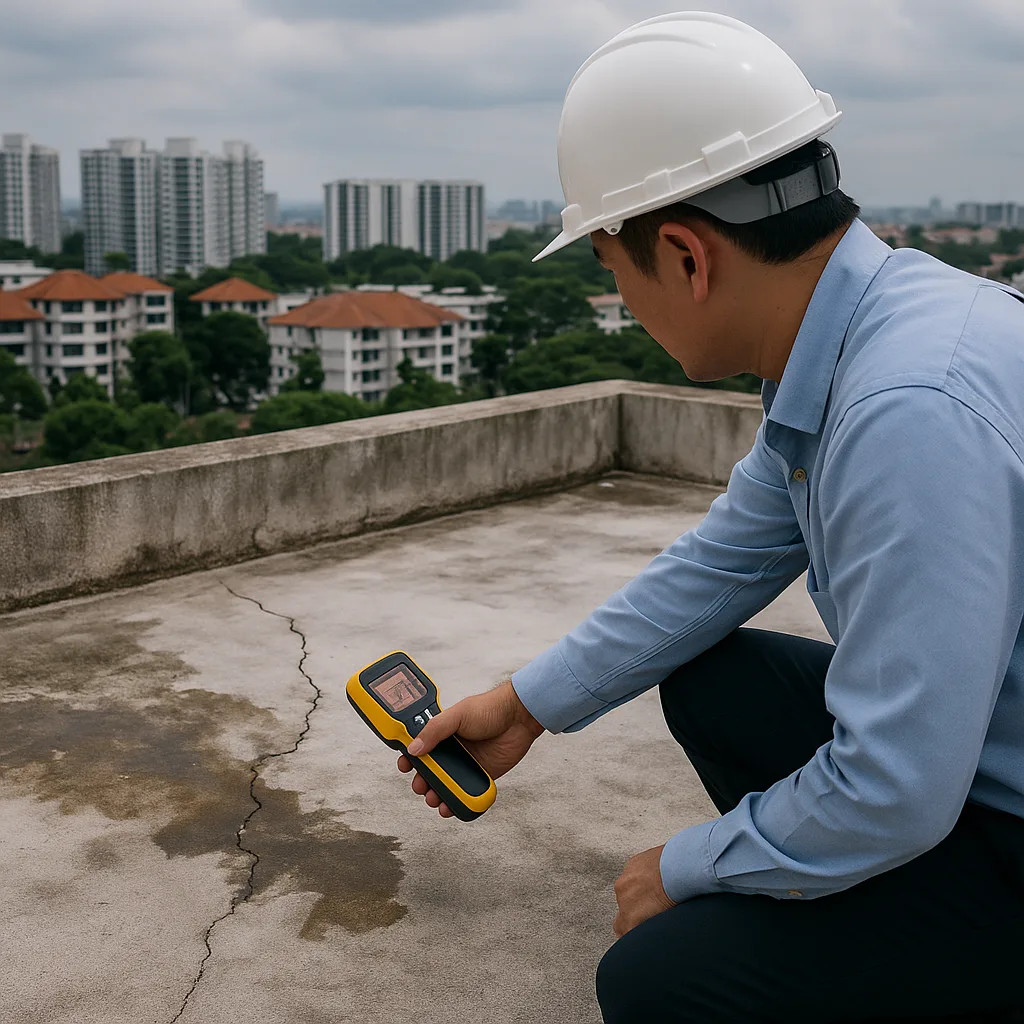
| 1. Site Evaluation | Identify leak source and structure type | Moisture meter, infrared camera |
| 2. Surface Cleaning | Remove old coating and debris | Power washer, scraper |
| 3. Crack Repair | Seal visible cracks | Epoxy filler, flexible sealant |
| 4. Primer Application | Improve adhesion | Roller / spray gun |
| 5. Coating / Membrane Layering | Apply multiple coats | Liquid membrane / torch-on sheet |
| 6. Reinforcement at Weak Points | Mesh or flashing installation | Polyester mesh |
| 7. Final Testing | Water ponding or spray test | Controlled water test |
Professional teams like Leak Works combine advanced diagnostics with experienced workmanship to ensure waterproofing lasts through Singapore’s demanding climate.
Cost Insights: Waterproofing in Singapore
| Area | Typical Cost (SGD) | Durability |
|---|---|---|
| Bathroom | $250 – $600 | 5 years |
| Roof / Balcony | $800 – $2,000 | 5–10 years |
| Wall or Planter Box | $400 – $900 | 4–6 years |
| Full Roof Deck System | $2,000 – $4,000 | Up to 10 years |
Costs vary depending on surface size, condition, and material type. Long-lasting solutions often provide warranty coverage, offering better value over time.
Preventing Future Failures
- Choose certified waterproofing specialists with proven experience.
- Avoid cutting corners during preparation and curing.
- Schedule biannual inspections, especially before and after the monsoon.
- Recoat exposed surfaces periodically to maintain integrity.
Sustainable waterproofing isn’t just about stopping leaks — it’s about building resilience into your property.
FAQ
1. How long should waterproofing last?
Most quality systems last 5–10 years with regular inspection and recoating.
2. Can I apply new waterproofing over the old one?
Only if materials are compatible. Otherwise, removal is necessary to avoid bubbling or peeling.
3. How can I tell if my waterproofing has failed?
Look for damp spots, ceiling stains, peeling paint, or musty smells — all early warning signs.
4. What’s the fastest way to test for leaks?
A water ponding test or thermal imaging scan by a professional service like Leak Works.
5. Can waterproofing fail due to humidity alone?
Yes, constant moisture softens coatings and encourages mould, particularly in poorly ventilated areas.
6. Should I waterproof both inside and outside surfaces?
In high-risk zones like bathrooms or balconies, double-layer systems (interior and exterior) provide optimal protection.
7. What’s the most durable waterproofing material for Singapore?
Polyurethane or acrylic-based liquid membranes offer the best UV and weather resistance.
Conclusion
Waterproofing failure isn’t always about bad products — it’s about how well they’re chosen, applied, and maintained. Singapore’s climate tests every surface, but with the right materials and regular care, your home can stay dry for years to come.
For accurate leak diagnosis and lasting waterproofing solutions, contact Leak Works — Singapore’s trusted experts in leak repair and prevention.
发表回复