
Introduction
When a leak appears in your ceiling or wall, the first instinct is often to patch it up and move on. A quick seal, a fresh coat of paint — problem solved, right? Not always. In Singapore’s humid environment, leaks rarely stop at the surface. What looks like a harmless damp patch may be a symptom of deeper structural wear or waterproofing failure.
The question many homeowners ask is: “Do I just need a surface patch, or does my home require a full structural fix?”
The answer depends on what’s really happening beneath the surface. This article breaks down the key differences between patching and structural repair — and how specialists like Leak Works determine which solution actually protects your home long-term.
Singapore Context: Why the Distinction Matters
Singapore’s climate accelerates both surface and structural damage. Constant rain, heat, and humidity wear down waterproofing systems faster than in temperate countries. In HDB flats and condos, leaks often travel through shared walls or ceilings, making root cause identification tricky.
A simple patch job may mask the problem temporarily but won’t hold up against recurring moisture from upper-floor bathrooms or rooftop seepage. Meanwhile, landed properties face a different risk — water penetrating concrete slabs or walls through hairline cracks, leading to corrosion within.
The difference between a quick fix and a structural solution can mean hundreds of dollars in future repairs — or thousands saved through early intervention.
What Is a Surface Patch?
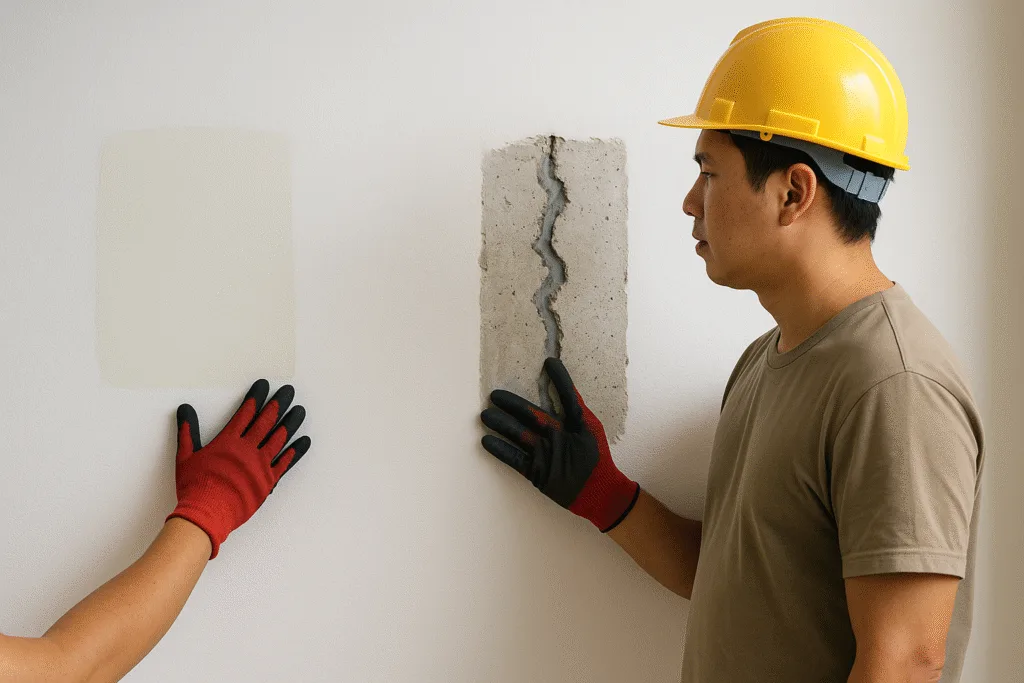
A surface patch is a cosmetic or short-term repair done to cover visible signs of damage like cracks, stains, or peeling paint. It typically involves:
- Sealing surface cracks with putty or sealant
- Applying a waterproof coating or paint over the affected area
- Repainting or resurfacing to restore appearance
Pros
- Quick turnaround – often completed in a few hours
- Low cost – ideal for minor, isolated issues
- Minimal disruption – no major hacking or drilling
Cons
- Temporary relief only – doesn’t address underlying cause
- May trap moisture – worsening hidden leaks
- Frequent recurrence – especially in high-moisture areas like bathrooms
Surface patches are best used for small, non-structural issues — such as condensation spots or cosmetic dampness.
What Is a Structural Fix?
A structural fix tackles the source of the leak — often within the concrete, plumbing, or waterproofing membrane. It’s a more comprehensive approach that restores integrity rather than appearance.
Structural repair can include:
- Re-waterproofing bathroom floors or balconies
- Replacing damaged membrane layers
- Epoxy injection to seal cracks deep within concrete
- Replacing corroded reinforcements or pipes
Pros
- Long-lasting protection – eliminates leak source
- Improves structural strength – prevents further deterioration
- Adds property value – ideal for long-term ownership or resale
Cons
- Higher upfront cost – materials and labour intensive
- Longer downtime – may take 1–3 days depending on scope
- Requires expert diagnosis – not suitable for DIY attempts
Surface Patch vs Structural Fix: Side-by-Side Comparison
| Factor | Surface Patch | Structural Fix |
|---|---|---|
| Purpose | Mask or seal surface damage | Eliminate root cause of leak |
| Duration | Short-term (3–6 months) | Long-term (5–10 years) |
| Cost Range (SGD) | $80 – $300 | $500 – $2,000+ |
| Tools Used | Paint, sealant, filler | Injection kit, membrane, waterproof coating |
| Ideal For | Minor wall cracks, small stains | Recurring leaks, deep structural cracks |
| Typical Areas | Ceiling paint, small wall dampness | Bathroom floor, roof, concealed pipe |
| Risk of Recurrence | High | Low |
| Professional Involvement | Optional | Strongly recommended |
Why Surface Patches Often Fail in Singapore
Due to Singapore’s high humidity, patched areas often fail because the trapped moisture beneath the surface has nowhere to escape. Within weeks, you may notice:
- Paint bubbling again
- New stains forming next to the repaired spot
- Persistent musty odour from damp plaster
In other words, a surface patch may only hide the symptom, while the underlying waterproofing or structural issue continues to worsen.
How Professionals Determine the Root Cause
A professional inspection team like Leak Works doesn’t just look at where the water appears — they trace where it originates. Here’s how the process typically unfolds:
| Step | Description | Tools Used |
|---|---|---|
| 1. Visual Assessment | Identify visible cracks, stains, and dampness patterns | Flashlight, inspection camera |
| 2. Moisture Mapping | Measure hidden moisture within walls/floors | Moisture meter |
| 3. Pressure / Dye Test | Track water flow paths | Coloured dye, water pump |
| 4. Thermal Imaging | Detect concealed leaks behind walls | Infrared scanner |
| 5. Root Cause Analysis | Determine whether leak is surface-level or structural | Technical report |
Once the root cause is confirmed, the specialist recommends whether a surface patch suffices — or if structural repair is necessary.
Real-World Scenarios
Scenario 1: Bathroom Ceiling Leak in an HDB Flat
A homeowner notices a dark patch on their bathroom ceiling. A surface repaint covers it — but the stain returns in two weeks.
Root Cause: Seepage from the upstairs neighbour’s floor waterproofing.
Solution: Joint repair between floors and re-waterproofing.
Scenario 2: Balcony Leak in a Condominium
Water seeps through the balcony floor and drips into the unit below. The resident applies sealant along the tiles.
Root Cause: Failed membrane beneath tiles due to poor installation.
Solution: Full structural re-waterproofing of the balcony.
Scenario 3: Small Crack on a Landed Property Wall
Hairline crack visible but no dampness or active leak.
Root Cause: Minor surface shrinkage from weather changes.
Solution: Simple patch and repaint — surface-level fix is sufficient.
Cost Considerations in Singapore
| Type of Work | Average Cost (SGD) | Duration | Lifespan |
|---|---|---|---|
| Surface Patch (Paint/Sealant) | $100 – $250 | 1–3 hours | 3–6 months |
| Crack Injection (Structural) | $300 – $800 | Half day | 5+ years |
| Full Waterproofing System | $800 – $2,500 | 1–2 days | 5–10 years |
While surface patches may seem cheaper, recurring leaks can end up costing more through repeated repairs and property damage. A structural solution, though costlier upfront, provides sustainable protection.
DIY vs Professional Repair
| Aspect | DIY Patch | Professional Fix |
|---|---|---|
| Accuracy | Visual only | Advanced detection tools |
| Materials | Basic sealants | Industrial-grade membranes |
| Durability | Weeks to months | Years |
| Risk | May worsen hidden leaks | Guaranteed workmanship |
| Warranty | None | Typically 1–5 years |
Homeowners can manage light cracks or minor dampness themselves, but structural waterproofing should always involve certified professionals to prevent recurrence.
Benefits of Choosing the Right Fix
- Longer lifespan – no repeated patching cycles
- Improved air quality – less mould and damp odour
- Lower long-term cost – prevention beats repair
- Higher resale value – professionally repaired homes attract buyers
- Peace of mind – confidence during heavy rain seasons
Singapore’s tropical storms are relentless; only a well-sealed structure keeps the elements at bay.
FAQ
1. How do I know if I need a structural fix instead of a patch?
If the same leak reappears after repair or expands over time, it’s likely structural.
2. Can waterproof paint stop leaks permanently?
No — it’s a surface treatment, not a waterproofing system.
3. What’s the most common cause of recurring leaks?
Failed waterproofing membrane beneath tiled surfaces like bathrooms and balconies.
4. Do HDB flats share waterproofing layers between units?
Yes. In most cases, water from an upper unit can leak into the one below. Coordination is key for effective repair.
5. How long should a structural waterproofing job last?
Typically between 5 to 10 years, depending on material quality and exposure.
6. Can I combine both patching and structural work?
Yes. Often professionals perform a structural fix first, then finish with cosmetic surface patching for a clean look.
7. Are there warranties for waterproofing services?
Reputable companies like Leak Works offer 2–5 years of workmanship warranty.
Conclusion
Surface patches are quick and convenient — but only address what you can see. Structural fixes, though more involved, deal with what truly matters: the source of the problem.
In Singapore’s wet and humid climate, investing in a proper structural solution protects not just your walls and ceilings, but the health and safety of your home.
For precise leak detection and professional waterproofing, reach out to Leak Works — Singapore’s trusted specialists in leak repair and waterproofing that lasts.
发表回复