
Introduction
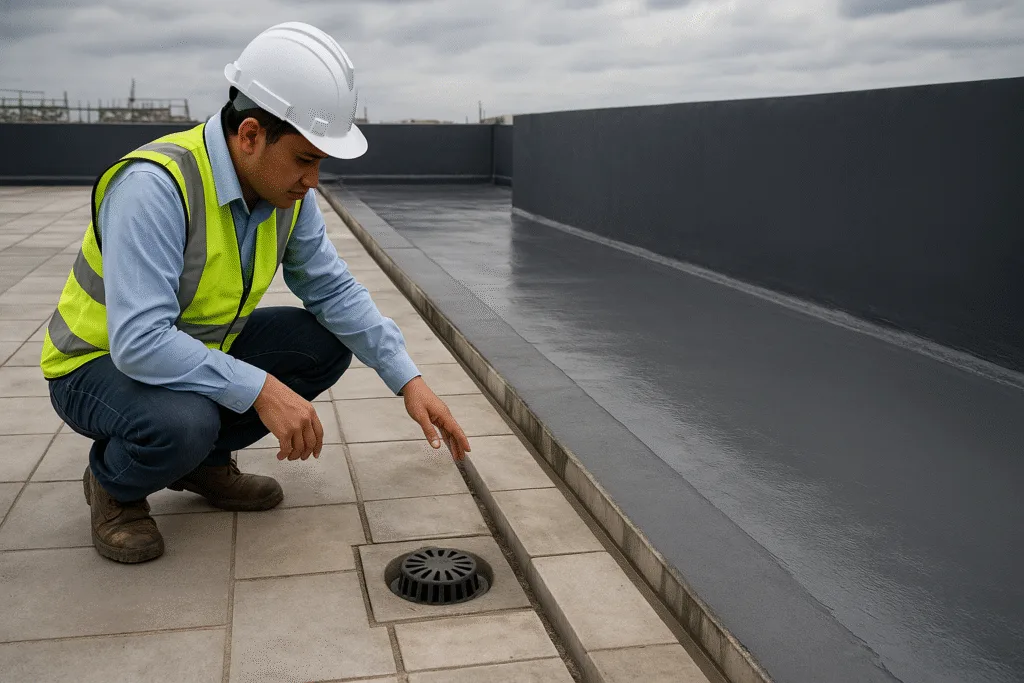
In Singapore’s tropical climate, rainfall is not an occasional event — it’s a constant design challenge. While most property owners focus on waterproofing alone, drainage is often the missing piece that determines long-term success. Without proper drainage, even the best waterproofing system will eventually fail under pressure.
Whether it’s a rooftop, balcony, basement, or bathroom, waterproofing and drainage must work as a pair, not as separate systems. This article explores how these two elements complement each other, why poor coordination leads to recurring leaks, and how professionals like Leak Works integrate both into a complete moisture-control strategy for Singapore homes and buildings.
Singapore Context: Heavy Rain Meets High Density
Singapore receives an average of 2,400 mm of rainfall per year, one of the highest in the region. With sudden tropical downpours, flat surfaces such as roofs, carparks, and balconies can quickly accumulate water.
Add to that:
- High humidity (often over 80%) that slows evaporation
- Compact housing layouts with minimal runoff space
- Frequent waterproofing deterioration due to heat exposure
In such conditions, water management is both structural and strategic. Waterproofing stops ingress, while drainage ensures water exits efficiently. Neglecting one puts the other at risk.
The Relationship Between Waterproofing and Drainage
Think of waterproofing as your shield, and drainage as your escape route. Together, they form a defensive system against leaks, seepage, and long-term water damage.
- Waterproofing prevents water from entering surfaces like roofs, walls, or basements.
- Drainage controls where that water goes after it lands.
If water has nowhere to flow, it pools — and even the strongest membrane cannot hold up forever. Conversely, if drainage is good but the surface isn’t sealed, water can still penetrate joints or cracks before reaching the drain.
Common Signs of Poor Coordination
Many Singaporean buildings show similar leak patterns caused by misaligned design between waterproofing and drainage:
- Water ponding on flat roofs or balconies
- Damp patches around floor traps
- Wall seepage despite waterproof coating
- Peeling paint or mould near drainage outlets
- Persistent ceiling stains even after waterproofing repairs
These aren’t random defects — they’re signs that water has been trapped between layers instead of directed away.
Case Study: Balcony Leakage in a Condominium
A resident waterproofed their balcony with high-quality polyurethane coating but ignored the clogged drainage outlets. During heavy rain, water pooled above the coating layer. Eventually, pressure forced it through tile joints into the ceiling of the unit below.
The waterproofing wasn’t defective — the drainage design was.
A rework involving both re-sloping and waterproofing solved the problem permanently.
Key Design Principles: Waterproofing & Drainage Integration
1. Slope Before You Seal
Flat surfaces are waterproofing’s worst enemy. Always design a slope — even 1:80 gradient — to ensure water flows toward outlets.
- For roofs and balconies, maintain minimum 5mm fall per meter.
- Check that waterproofing membranes follow the slope, not level over it.
2. Choose Compatible Materials
Waterproofing and drainage components must be chemically compatible. For example:
- Bituminous membranes may react with PVC drains.
- Acrylic coatings should not touch metal flashing without primer.
Compatibility ensures both systems expand and contract together under Singapore’s heat.
3. Protect Drain Outlets During Application
Blocked or covered outlets are a common site mistake. Always ensure outlets remain open during waterproofing works, with flanges properly sealed around the drain collar.
4. Layering Matters
Correct layering prevents water from getting trapped:
- Structural slab
- Slope screed
- Waterproofing membrane
- Protection layer (optional)
- Floor finish (tiles or coating)
- Drainage path
If layers are reversed or misaligned, water becomes trapped between levels.
5. Provide Secondary Drainage
For critical areas like planter boxes or roof decks, include a secondary drainage layer (e.g., geotextile filter or drainage cell) beneath the waterproofing system. This ensures any seepage under tiles escapes without pressure buildup.
Types of Drainage Systems for Waterproofed Surfaces
| Type | Best For | Key Features |
|---|---|---|
| Surface Drainage | Open areas like roofs, carparks, balconies | Channels or grates collect rainwater |
| Subsurface Drainage | Green roofs, planters, basement walls | Uses geotextile mats or perforated pipes |
| Trapped Drainage | Bathrooms, kitchens | Floor traps with P-traps or gratings |
| Slot Drain Systems | Modern architecture | Sleek linear design, easy maintenance |
Proper selection depends on space constraints and maintenance access — a frequent issue in Singapore’s compact layouts.
Professional Integration Process
| Step | Waterproofing Action | Drainage Action |
|---|---|---|
| 1. Assessment | Identify leak-prone zones | Evaluate existing drain slope & layout |
| 2. Substrate Prep | Clean and prime surfaces | Flush drains to remove blockages |
| 3. Installation | Apply membrane along fall direction | Ensure outlets remain clear |
| 4. Protection | Add screed or mat above membrane | Confirm slope continuity |
| 5. Testing | Ponding or flood test | Check for outlet flow efficiency |
Professionals like Leak Works often perform joint testing, combining ponding and drainage flow assessments to ensure complete reliability before handover.
Common Design Mistakes in Singapore
| Mistake | Consequence |
|---|---|
| Zero slope on roof decks | Water ponding and premature membrane failure |
| Incompatible membrane & drain material | Adhesion loss and leakage at joints |
| Hidden drains without access | Impossible maintenance, long-term blockage |
| Poorly sealed pipe penetrations | Persistent seepage under coating |
| Ignoring secondary drainage | Pressure buildup under tiled surfaces |
Avoiding these errors at the design stage saves years of leak complaints and repair cycles.
Cost and Maintenance Considerations in Singapore
| Work Type | Typical Cost (SGD) | Inspection Frequency | Expected Lifespan |
|---|---|---|---|
| Flat Roof Waterproofing | $800 – $2,500 | Every 2 years | 8–10 years |
| Balcony / Deck System | $500 – $1,200 | Every 2 years | 5–8 years |
| Drainage Channel Installation | $400 – $1,000 | Yearly cleaning | 10+ years |
Coordinated systems last longer and require fewer interventions. Periodic drain cleaning and membrane inspection before the monsoon are the best practices for Singapore homeowners.
DIY Tips for Homeowners
- Ensure drain covers remain free of leaves and debris.
- Watch for stains or odours around floor traps.
- Test balcony drainage by gently pouring water toward outlets.
- Don’t seal or paint over drainage openings.
- Engage professionals for leaks persisting after surface repairs.
Even with regular maintenance, waterproofing’s lifespan depends on how well it was paired with drainage during installation.
Benefits of Integrated Design
- Zero Water Ponding: Proper slope + outlet ensures fast water removal.
- Longer Membrane Life: Reduces constant hydrostatic pressure.
- Lower Maintenance Cost: Fewer recurring leak complaints.
- Enhanced Safety: Prevents slippery wet patches.
- Sustainability: Promotes efficient water reuse and rain harvesting.
Waterproofing and drainage aren’t rivals — they’re partners in every successful building envelope.
FAQ
1. Can waterproofing work without drainage?
No. Without a way for water to flow away, even good waterproofing eventually fails from pressure and exposure.
2. What’s the ideal roof slope for Singapore?
Typically 1:80 (about 12mm per meter) is sufficient for rainwater runoff.
3. Should drains be waterproofed too?
Yes — the area around drain collars and flanges must be sealed to prevent leakage.
4. Can I add drainage after waterproofing is done?
Not effectively. Both must be designed and installed together.
5. How do I know if my drainage system is failing?
Look for slow water flow, pooling after rain, or damp edges near outlets.
6. What’s the most durable waterproofing for outdoor areas?
Polyurethane or torch-on membrane systems with UV protection.
7. Do professionals offer joint waterproofing + drainage packages?
Yes, companies like Leak Works provide integrated inspection and installation to ensure full compatibility.
Conclusion
Waterproofing and drainage are two sides of the same shield. In Singapore’s wet, tropical environment, a good design doesn’t just block water — it guides it.
When both systems are planned together, they prevent leaks, reduce maintenance costs, and extend the lifespan of your property.
For comprehensive waterproofing and drainage solutions tailored to Singapore homes, contact Leak Works — specialists in designing dry, durable spaces that last through every storm.
发表回复