
Introduction
In tropical Singapore, where intense rainstorms can dump litres of water in minutes, a properly functioning gutter and downpipe system is essential. When it fails — through blockage, corrosion, or poor slope design — water doesn’t just overflow outside. It can backflow into roofs, seep into walls, and even cause ceiling leaks that look like waterproofing failures.
Understanding the signs of gutter and downpipe problems — and knowing how to confirm whether it’s blockage, backflow, or leakage — helps homeowners act before the next storm does real damage.
Singapore Context: Why Gutters and Downpipes Are Vulnerable
Singapore’s year-round humidity and sudden downpours mean gutters are constantly under stress. Leaves from roadside trees, bird nests, algae growth, and even wind-blown debris collect inside them faster than many homeowners expect.
In landed homes, long roof gutters channel large volumes of water. If even a small section clogs, water can overflow toward the fascia boards or seep under roof tiles. For high-rise apartments or condos, shared vertical downpipes can leak through joints, especially if sealants or fittings degrade over time.
Another local factor is heat cycling — constant sun exposure followed by heavy rain expands and contracts metal or PVC joints, loosening them over the years.
Why Gutters and Downpipes Matter
These systems quietly protect your property’s structure by directing rainwater safely away from the roof and walls. When they malfunction, you’ll notice:
- Overflowing water spilling over edges during rain.
- Water stains on walls or soffits below the gutter line.
- Ceiling leaks inside rooms directly under the roof.
- Mould growth and peeling paint near downpipe outlets.
- Foundation dampness for landed homes.
Left unchecked, even a small blockage can cause thousands of dollars in damage — not just to the gutter itself, but to roofing, plaster, and interior finishes.
Common Gutter and Downpipe Problems in Singapore
1. Blockage from Debris and Algae
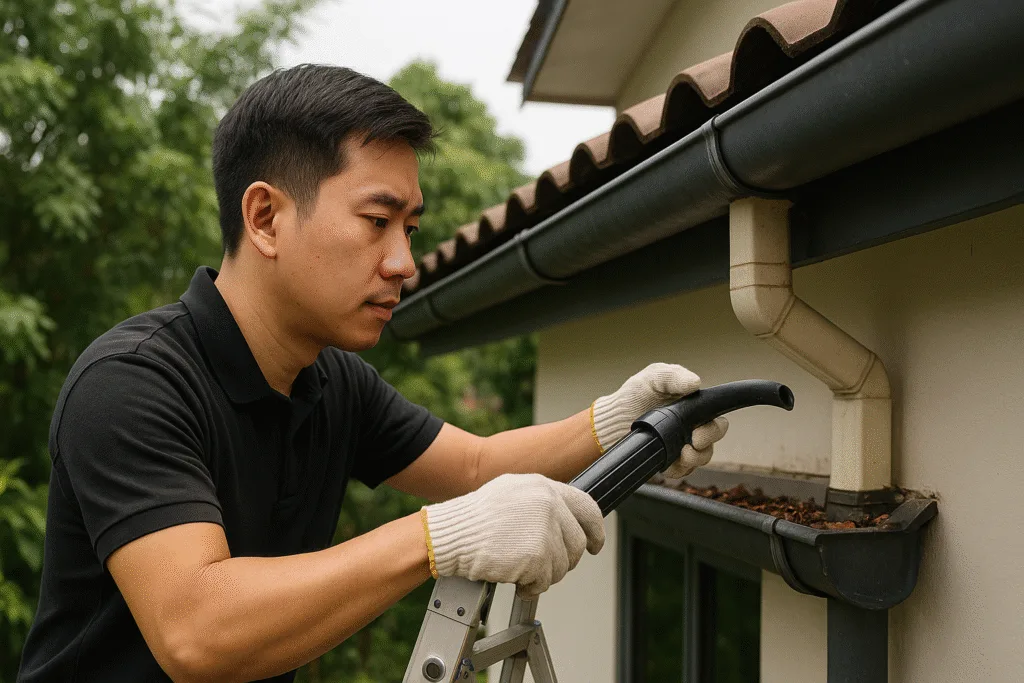
This is by far the most common issue. Gutters fill with leaves, bird droppings, and fine dust, creating a sludge that traps water. Over time, stagnant water encourages algae growth that worsens the clog.
Signs:
- Overflow during rain despite clear roof surfaces.
- Visible plant growth in the gutter.
- Dripping long after the rain has stopped.
Fix: Regular cleaning and installing leaf guards or mesh filters at the inlet.
2. Backflow from Poor Slope or Misalignment
Gutters should slope gently toward downpipes — about 1–2 mm per metre. Over time, sagging brackets or thermal expansion can alter this slope, causing water to pool or flow backward into the roof edge.
Indicators:
- Water sitting still in the gutter hours after rain.
- Damp fascia boards or soffit panels.
- Overflow near the middle of the gutter, not just the ends.
Solution: Re-secure or realign gutter brackets and check for roof flashing integrity.
3. Downpipe Leaks or Joint Failures
PVC downpipes often leak at joints where sealant has deteriorated or the pipe is cracked. Metal pipes may corrode at bends or weld points.
Symptoms:
- Stains or wet streaks along external walls.
- Mould or moss forming at pipe bends.
- Water dripping from joints instead of outlets.
Professional fix: Replace damaged segments and re-seal joints with weatherproof polyurethane or rubber gaskets.
4. Hidden Internal Downpipe Leaks (in Condos or Apartments)
Some high-rise units have concealed downpipes running inside wall cavities. When these develop leaks, homeowners only notice damp walls or ceiling stains — often misdiagnosed as bathroom or waterproofing issues.
Diagnosis requires:
- Moisture mapping to trace water paths.
- Acoustic leak detection for pipe joints.
- Thermal imaging to locate hidden dampness.
Specialists like LEAK Works often handle such cases with non-invasive tools, sparing walls from unnecessary hacking.
5. Gutter Corrosion and Structural Damage
Metal gutters, especially galvanized or mild steel types, eventually rust in humid conditions. Once rust perforates the base, leaks appear along the edge, not just at joints.
Telltale signs:
- Rust-coloured streaks on exterior walls.
- Flaking paint or bubbling near the eaves.
- Visible holes or cracked coatings in metal channels.
Solution: Replace corroded sections with aluminium or uPVC gutters, which resist rust and UV damage.
Step-by-Step: Professional Leak & Blockage Diagnosis
| Step | Process | Description |
|---|---|---|
| 1 | Visual Roof & Gutter Survey | Inspect slope, bracket condition, debris accumulation. |
| 2 | Water Flow Simulation | Controlled water test to observe drainage and overflow points. |
| 3 | Downpipe Inspection | Camera or flexible scope checks inside pipes for blockage. |
| 4 | Moisture & Thermal Mapping | Identify any internal seepage paths or backflow effects. |
| 5 | Repair Proposal & Report | Detailed findings and photographic evidence for homeowner or MCST. |
Professionals combine rooftop and interior assessments to confirm whether leaks originate from gutter overflow or separate roof faults.
DIY Checks Homeowners Can Do
You can perform simple observations during or after rain:
- Check flow: Watch from below to see if water spills over edges.
- Listen for dripping: Continuous dripping indicates a blocked downpipe.
- Inspect visually: Use binoculars or phone zoom to check for vegetation.
- Pour test: On single-storey homes, pour water into the gutter and watch drainage speed.
- Feel interior walls: Damp patches below roof edges may signal backflow.
Avoid climbing onto roofs without safety equipment — it’s best left to professionals.
Repair Solutions for Gutter and Downpipe Issues
| Problem | Repair Option | Description | Estimated Cost (SGD) |
|---|---|---|---|
| Blockage | Cleaning & flushing | Manual debris removal, high-pressure rinse. | $150 – $300 |
| Misalignment | Bracket realignment | Adjust gutter slope to correct backflow. | $200 – $400 |
| Joint leakage | PU sealant or gasket replacement | Re-seal leaking joints. | $120 – $250 |
| Rust damage | Partial gutter replacement | Swap corroded section with new aluminium/uPVC. | $300 – $800 |
| Concealed pipe leak | Non-invasive detection + repair | Moisture scan, epoxy patch or replacement. | $500 – $1,200 |
Costs vary by height, access, and roof design — especially in multi-storey houses or condos.
Signs You Need Immediate Service
Don’t wait for the next storm. Call a specialist if you notice:
- Water spilling over the sides during normal rain.
- Bubbling paint or plaster near the ceiling.
- Persistent damp smell near roof corners.
- Cracks or separation at gutter joints.
- Water dripping days after rainfall.
Singapore’s frequent thunderstorms can turn small blockages into full-scale leaks overnight.
Health and Structural Risks
Gutter overflow often leads to hidden mould growth in ceiling cavities. Prolonged dampness can also weaken timber battens or corrode metal fasteners holding roof sheets in place.
For landed homes, poorly directed downpipes cause foundation settlement over time due to constant moisture at the base of walls. Addressing leaks early saves both structure and health.
DIY vs Professional Service
| Aspect | DIY Cleaning | Professional Service |
|---|---|---|
| Safety | Risk of falls, limited reach. | Trained crew with safety gear. |
| Thoroughness | Surface-level clearing. | Internal flushing, joint check. |
| Tools | Ladder, bucket, hose. | High-pressure washer, inspection camera. |
| Cost | Low (under $50). | Moderate ($150–$300). |
| Reliability | May miss hidden leaks. | Detects full system faults. |
DIY cleaning helps between storms, but professional servicing once or twice a year ensures long-term protection.
Maintenance Schedule for Singapore Homes
| Task | Frequency | Notes |
|---|---|---|
| Gutter cleaning | Every 6 months | More often near trees. |
| Downpipe flushing | Annually | Prevent sediment buildup. |
| Joint inspection | Every 2–3 years | Look for sealant cracks. |
| Repainting (metal gutters) | Every 5 years | Prevent rust formation. |
| Leak check before monsoon season | October & March | Ideal for pre-storm preparation. |
A short maintenance session now prevents expensive repair jobs later.
Environmental Angle: Reuse That Rainwater
While repairing or upgrading gutters, some Singapore homeowners choose to add rainwater harvesting systems. Properly filtered gutter water can be reused for garden irrigation or outdoor cleaning, reducing water bills — and promoting sustainable living.
Key Benefits of Regular Gutter and Downpipe Maintenance
| Benefit | Description |
|---|---|
| Prevents roof leaks | Keeps rainwater flowing correctly. |
| Protects structure | Avoids dampness and wall staining. |
| Reduces repair costs | Early action stops major damage. |
| Improves hygiene | Less mould and mosquito breeding. |
| Boosts property value | Well-maintained drainage reflects good upkeep. |
FAQs
1. How often should gutters be cleaned in Singapore?
At least twice a year — more if your property is near trees or open roads.
2. My ceiling leaks during heavy rain. Could it be the gutter?
Yes, overflowing gutters or backflow into roof joints often cause ceiling dampness.
3. What material is best for gutters in Singapore?
uPVC and aluminium are preferred — they resist rust, humidity, and UV exposure.
4. Are gutter guards worth it?
Yes, especially in leafy neighbourhoods. They reduce maintenance frequency.
5. Can blocked downpipes cause wall cracks?
Indirectly, yes. Prolonged dampness weakens plaster and encourages hairline cracks.
6. How do I know if my downpipe is blocked?
If water overflows near the top or drains slowly after rain, the pipe may be clogged.
7. Do high-rise apartments have individual downpipes?
Most share vertical stacks. Leaks or blockages should be reported to the condo MCST or HDB branch office for joint repair.
Conclusion
In Singapore’s tropical weather, gutters and downpipes are silent guardians against water damage — until something goes wrong. Whether it’s blockage, backflow, or leakage, the fix starts with accurate diagnosis.
Professionals like LEAK Works combine inspection, testing, and targeted repairs to restore smooth drainage and prevent ceiling or wall seepage.
Clean gutters mean more than neat roofing — they mean a home that’s dry, safe, and storm-ready all year long.
发表回复