
Introduction
In Singapore’s dense residential landscape — where high-rise balconies face heavy rainfall and humid air year-round — balcony leaks are among the most common household complaints. A few drops after a storm may seem harmless, but they often hint at deeper issues: damaged waterproofing, clogged drainage, or hidden cracks beneath the surface tiles.
Balcony leaks don’t just spoil the floor finish. Left unchecked, they can seep into the ceiling or walls of the unit below, cause paint to peel, and invite disputes between neighbours. This guide breaks down the most common balcony leak hotspots in Singapore homes and how professionals confirm the exact source before repair work begins.
Singapore Context: Why Balconies Leak So Often
Balcony waterproofing in Singapore faces constant stress from the tropical climate. The combination of intense afternoon sun, frequent downpours, and high humidity causes thermal expansion and contraction in tiles, grout, and concrete slabs. Over time, these micro-movements weaken the waterproofing membrane and create tiny gaps where water can penetrate.
Additionally, many older condominiums and HDB flats were built before modern waterproofing standards were tightened. Some older balconies rely on simple cement screeds or single-layer membranes that degrade faster under UV exposure.
Another local factor: dense vertical construction. In stacked balcony layouts, water from an upper unit’s balcony can seep into walls, columns, or ceilings below. Rainwater may also blow in from the sides due to strong winds during monsoon seasons, especially in west- or south-facing units.
Why Balcony Leaks Matter
A balcony leak might start as mild dampness or hairline cracks, but it often escalates. Problems include:
- Water staining and efflorescence on walls or ceilings below.
- Mould growth that worsens indoor air quality.
- Structural deterioration, especially if reinforced steel begins to rust.
- Neighbour disputes in shared developments.
- Reduced property value if visible stains persist or recur after renovation.
Identifying the source correctly is the key — and not every wet patch means the same thing.
Top Balcony Leak Hotspots in Singapore Homes
Below are the areas professionals check first when investigating balcony leaks.
1. Tile Joints and Grout Lines
Over time, grout between balcony tiles becomes brittle or cracked. Tiny voids allow rainwater to seep through, bypassing the tiles entirely. The water then gets trapped under the surface and seeps into the slab below.
What to look for:
- Hairline cracks along grout lines.
- Whitish stains or powdery residue (efflorescence).
- Damp spots that reappear after rain.
2. Floor-to-Wall Junction (Perimeter Seal)
Where the balcony floor meets the wall is a classic weak point. If sealant or skirting tiles have detached, water can flow down through this joint into the underlying structure.
Signs:
- Water marks forming along the wall edges.
- Bubbling or peeling paint just inside the adjacent interior wall.
- Damp smell near the corner skirting.
3. Balcony Door Thresholds
Sliding doors often sit over a track system that can collect water. If the waterproofing membrane under this threshold fails, leaks may migrate indoors or downward.
Clues:
- Water accumulation in the sliding door track after rain.
- Warped wooden flooring inside the room.
- Leaks appearing at the ceiling directly below the door area.
4. Balcony Drain and Outlet
Blocked balcony drains are another frequent culprit. When debris like leaves or dust clogs the outlet, water pools up, eventually breaching waterproofing layers or flowing through unintended paths.
What to check:
- Slow drainage or visible puddles after a downpour.
- Damp stains radiating from the drain area.
- Foul smell indicating trapped organic matter.
5. Railing Posts and Screw Holes
Metal railing posts anchored through tiles often allow water ingress if not sealed correctly. Over time, vibrations, thermal expansion, or corrosion widen the gap.
Signs:
- Rust streaks near railing bases.
- Wet patches directly below the post area.
- Deteriorating grout or cracked tile corners nearby.
6. Wall Cracks and Render Defects
External walls exposed to wind-driven rain can develop hairline cracks. Even minor fissures let moisture penetrate, particularly when adjacent to balcony edges.
Indicators:
- Dampness spreading horizontally on the balcony wall.
- Peeling paint or slight swelling of plaster.
- Persistent moisture despite recent resealing of the floor.
Step-by-Step: How Professionals Confirm a Balcony Leak
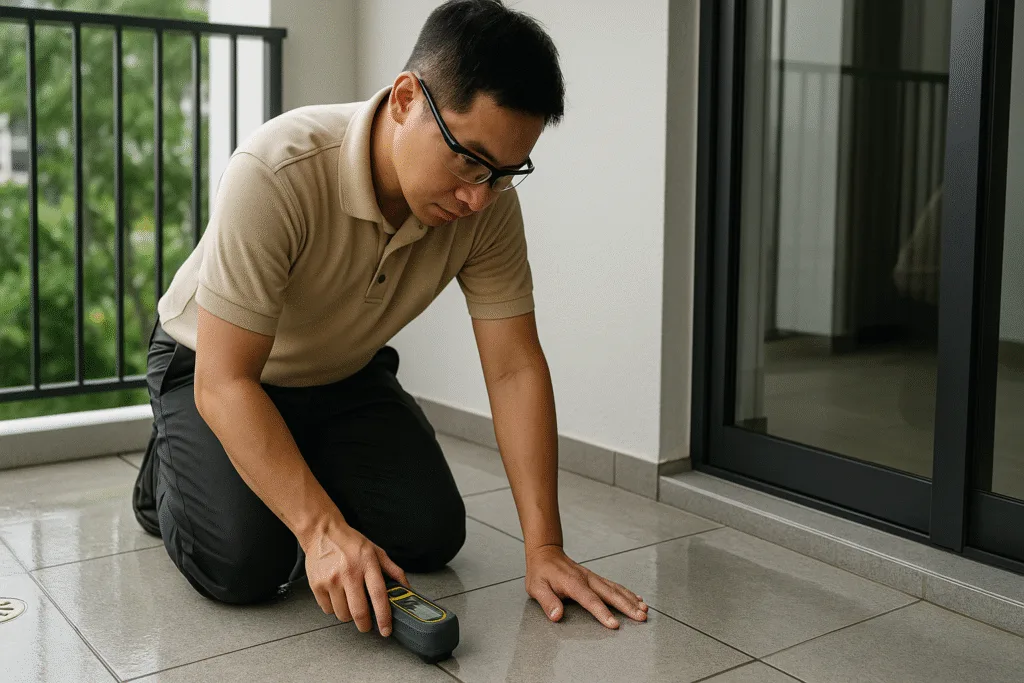
Singapore leak specialists use a combination of visual inspection, moisture testing, and controlled water tests to confirm the source of balcony leaks without unnecessary hacking.
| Step | Method | Description |
|---|---|---|
| 1 | Visual & Layout Survey | Map the balcony’s slope, outlet position, and wall interfaces to understand drainage direction. |
| 2 | Moisture Meter Reading | Identify damp areas behind tiles or inside walls using surface moisture detectors. |
| 3 | Thermal Imaging | Detect cooler zones that indicate trapped moisture paths. |
| 4 | Water Ponding Test | Controlled water is poured and observed over time to locate seepage points. |
| 5 | Dye Tracing | Non-toxic coloured dye helps trace leak migration into the slab below. |
| 6 | Acoustic Leak Test | Sound sensors pick up hidden dripping or pipe faults if plumbing is involved. |
| 7 | Final Confirmation Report | A detailed leak report documents all findings — often required for HDB or condo management claims. |
Experienced teams like LEAK Works combine these tools to deliver precise results and prevent unnecessary demolition.
Case Example: A Condo Balcony Leak in Tampines
A Tampines condo owner noticed recurring damp patches on her living room ceiling, directly below the upper neighbour’s balcony. Despite multiple repainting attempts, the stains kept returning.
A professional inspection found:
- Clogged balcony drain causing water pooling.
- Cracked grout lines near the sliding door threshold.
- Failed perimeter sealant.
The leak detection team performed a dye test and thermal imaging, confirming seepage from pooled water during rain. After non-hacking waterproofing repair — sealing joints and applying a nano-based topcoat — the leak was resolved without replacing tiles.
DIY Checks Before You Call an Expert
You can perform a few simple checks to get an early idea of where the leak might be coming from:
- Visual Scan After Rain: Observe if certain tile sections stay darker or wetter longer than others.
- Door Track Inspection: Wipe the track and check if water reappears after a few minutes.
- Balcony Drain Test: Pour a small bucket of water to ensure free flow.
- Sealant Tap Test: Lightly tap skirting or grout — hollow sounds may mean loose adhesion.
- Interior Wall Check: Run your hand over the wall adjacent to the balcony for cool, damp spots.
These observations help specialists like LEAK Works diagnose faster once they arrive.
DIY Fixes vs Professional Solutions
| Approach | Pros | Cons |
|---|---|---|
| DIY Sealant Reapplication | Cheap, easy to apply on small cracks. | Temporary — may trap moisture if leak is deeper. |
| Tile Replacement | Fixes local damage. | Doesn’t address underlying membrane failure. |
| Professional Waterproofing (Non-Hacking) | Quick, clean, long-lasting. | Costs more initially but prevents repeat leaks. |
| Full Hacking and Re-Tiling | Permanent if done properly. | Expensive, noisy, requires access and permits. |
For most cases in Singapore, non-hacking waterproofing treatments (e.g. chemical injection or coating) are enough to stop leaks while keeping costs manageable.
Costs and Repair Frequency in Singapore
| Service Type | Typical Cost (SGD) | Duration | Notes |
|---|---|---|---|
| Leak detection & diagnostic report | $150 – $350 | 1–2 hours | Required for management/insurance claims. |
| Non-hacking waterproofing coating | $500 – $1,200 | 1 day | Fast application, minimal disruption. |
| Full balcony re-waterproofing | $1,500 – $3,500 | 3–5 days | Includes tile removal and membrane renewal. |
| Drain repair or replacement | $250 – $800 | 1 day | If drainpipes or outlets are damaged. |
Maintenance tip: Inspect and reseal balcony perimeters every 8–10 years, or sooner if cracks or stains appear.
Signs You Should Act Now
If you notice any of these symptoms, don’t delay:
- Persistent watermarks or musty odour after rain.
- Ceiling dampness below balcony area.
- Paint bubbling or efflorescence on adjacent walls.
- Railing post rusting or loose tiles.
- Mould forming near skirting edges.
In high humidity, water retention can worsen in days, not weeks.
Health and Lifestyle Impact
Balcony leaks don’t just damage property — they affect health and comfort. Moisture trapped beneath tiles creates an environment for mould, mildew, and bacteria. Over time, this can lead to respiratory irritation and allergic reactions.
A watertight balcony also contributes to peace of mind. You can enjoy your morning coffee outdoors or host guests without worrying about the ceiling downstairs.
Key Takeaways
| Topic | Insight |
|---|---|
| Common Hotspots | Grout, drain outlets, door thresholds, wall edges. |
| Detection Methods | Moisture testing, thermal imaging, dye tracing. |
| Preferred Fix | Non-hacking waterproofing for mild to moderate leaks. |
| Cost Range | $500 – $3,500 depending on severity. |
| Professional Advantage | Accurate diagnosis, minimal damage, long-term reliability. |
FAQs
1. How do I know if my balcony leak is from waterproofing or from a drain?
If the leak occurs mainly after rainfall, it’s likely waterproofing. If it persists even in dry weather, it could be from a damaged drainpipe or plumbing line.
2. Can waterproofing be done without hacking tiles?
Yes. Many Singapore specialists use nano-technology coatings or injection systems that seal leaks without removing tiles.
3. How long does balcony waterproofing last?
Typically 8–10 years, depending on sun exposure, drainage, and tile maintenance.
4. Do I need to inform my condo management before balcony waterproofing?
Yes. Most MCSTs require prior notice or approval for works involving waterproofing or balcony access.
5. What’s the quickest way to test for a balcony leak?
Pour water systematically over sections of the balcony and observe the ceiling below, or call for a moisture scan to confirm seepage routes.
6. Will repainting fix water stains?
No. Painting hides the symptom but not the cause. Moisture will resurface unless waterproofing is repaired.
7. Who pays for balcony leak repairs between neighbours?
Responsibility depends on the source. If the leak originates from the upper unit’s balcony, they are typically liable for repair costs.
Conclusion
Balcony leaks may seem like minor inconveniences, but in Singapore’s climate, they can quickly escalate into costly repairs. The secret lies in early detection — identifying the exact leak hotspot before guessing at solutions.
With advanced inspection tools and local expertise, LEAK Works helps homeowners confirm the source of leaks precisely, offering both non-hacking waterproofing and long-term prevention plans.
Protect your home — and your peace of mind — by addressing that damp balcony before it becomes a full-blown ceiling issue.
发表回复