
1. Introduction
White, powdery stains on your walls. Black spots blooming across your bathroom ceiling. A faint damp smell that lingers after rain. These are the quiet signs of water infiltration — often dismissed until the damage becomes visible and costly.
In Singapore, where humidity is high and rain is frequent, efflorescence and mold are among the most common indicators of moisture problems inside buildings. They may seem purely cosmetic, but in truth, they reveal a breakdown in waterproofing or ventilation systems that can affect both health and structure.
This article explores the causes, consequences, and professional solutions for efflorescence and mold in Singapore homes and buildings — and why companies like LEAK.WORKS are called in to fix them.
2. Singapore Context
Singapore’s climate is a perfect incubator for moisture problems:
- Year-round humidity: typically 75–90%.
- Heavy rainfall: averaging 167 rainy days a year.
- Concrete architecture: most HDBs, condos, and landed houses rely on cementitious structures that naturally absorb water.
In HDB flats, efflorescence commonly shows up along bathroom or balcony walls. Condominiums may see mold growth near air-conditioning ledges or planter boxes, while landed homes often struggle with damp basements and roof leaks.
Without proper waterproofing, these minor signs escalate into structural and indoor air quality issues.
3. Why It Matters
Efflorescence and mold are not just visual defects — they’re warnings.
Efflorescence (white mineral deposits on surfaces) signals that water is migrating through the wall or floor, carrying dissolved salts to the surface.
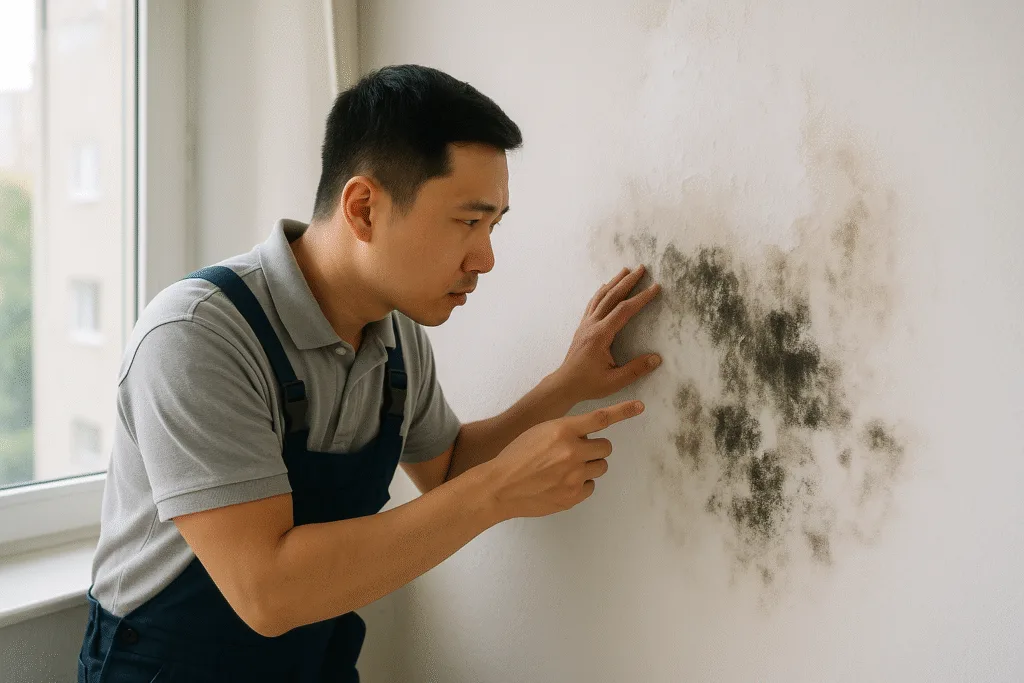
Mold (dark or fuzzy patches) shows that moisture has lingered long enough to support fungal growth.
Together, they can lead to:
- Degrading plaster and paint — leading to bubbling, flaking, or discoloration.
- Concrete spalling — water intrusion causes steel reinforcement to rust and expand.
- Health hazards — mold spores can aggravate allergies, asthma, and sinus infections.
- Odor and humidity discomfort — damp interiors feel stuffy and unpleasant.
What starts as a harmless white patch could evolve into major waterproofing failure if ignored.
4. Types of Moisture Problems
Let’s break down the main types of moisture-related issues seen in Singapore properties:
a. Efflorescence on Walls and Floors
- Cause: water moves through porous concrete or grout, dissolving salts.
- Appearance: white, chalky residue on walls or tiles.
- Common in: bathrooms, balconies, external façades.
- Solution: treat source of seepage, re-waterproof affected areas, and clean surface with neutral pH solutions.
b. Mold Growth on Walls or Ceilings
- Cause: trapped humidity or hidden leaks.
- Appearance: dark, greenish, or black patches; musty smell.
- Common in: air-conditioned bedrooms, ceilings under bathrooms, and window corners.
- Solution: repair leaks, improve ventilation, and disinfect affected surfaces.
c. Rising Damp
- Cause: moisture rising from ground level through concrete.
- Common in: landed homes or basement walls.
- Solution: chemical damp-proof course injection or negative-side waterproofing.
d. Condensation Problems
- Cause: temperature differences and poor air circulation.
- Solution: install exhaust fans, seal window gaps, and use anti-condensation coatings.
5. Step-by-Step: How Professionals Handle It
When you engage a professional team like LEAK.WORKS, here’s how the process unfolds:
- Visual & Moisture Inspection – The team identifies visible damage, moisture patterns, and humidity levels.
- Infrared or Moisture Meter Testing – Non-destructive tools locate hidden damp areas behind walls or tiles.
- Source Tracing – Controlled water tests or dye tests help confirm if the issue stems from rainwater, pipe leaks, or condensation.
- Surface Preparation – Efflorescence is gently removed and mold is disinfected with approved biocides.
- Repair & Waterproofing Treatment – Depending on the cause, technicians may apply PU injection, waterproofing membranes, or sealant systems.
- Finishing & Preventive Coating – Surfaces are restored with anti-fungal or water-repellent coatings.
- Final Check – Moisture readings are re-tested to ensure dryness and stability.
This systematic approach not only removes visible stains but also eliminates the root cause.
6. DIY vs Professional
DIY cleaning can work for light surface stains: vinegar sprays for mold, or diluted cleaners for efflorescence. But these are temporary measures.
What DIY can’t fix:
- Internal cracks or failed waterproof membranes.
- Leaks hidden behind tiles or walls.
- Deep fungal colonies growing beneath paint layers.
Professional waterproofing ensures long-term results through diagnostic accuracy, specialized equipment, and warranties. In Singapore’s climate, this makes a clear difference between a recurring problem and a one-time fix.
7. Signs You Need Immediate Help
- White, powdery residue reappears after cleaning.
- Musty or earthy smell, especially after rain.
- Paint bubbling, discoloration, or peeling.
- Mold spreading beyond one small patch.
- Damp or cold wall sections.
- Allergic reactions worsening indoors.
If these symptoms persist, your building is actively absorbing moisture. Prompt waterproofing intervention prevents costly repair work later.
8. Health, Safety & Lifestyle Impacts
Mold spores can release mycotoxins that affect respiratory health, especially in children or the elderly. Even mild exposure causes sneezing, skin irritation, and fatigue.
Efflorescence, though non-toxic, weakens surfaces and allows further water ingress, setting the stage for mold to thrive.
Solving these problems improves not only health but also:
- Air freshness – no more musty odors.
- Energy efficiency – drier air allows aircons to cool more efficiently.
- Property durability – walls and tiles remain intact longer.
Dry walls make for calmer spaces — and a much easier home to maintain.
9. Cost & Frequency in Singapore
Efflorescence and mold treatment costs depend on scale and source.
| Service Type | Estimated Cost (SGD) | Property Type | Typical Frequency |
|---|---|---|---|
| Surface mold cleaning | $150–$300 | HDB, condos | As needed |
| Wall seepage waterproofing | $400–$800 | HDB, condos | Every 5–7 years |
| PU injection (localized) | $600–$1,200 | Condos, landed | 5–8 years lifespan |
| Basement damp-proofing | $1,000–$3,000 | Landed homes | 8–10 years durability |
Regular inspection before monsoon seasons (around November to January) helps prevent moisture buildup from worsening.
10. Key Benefits Summary
- Identify and eliminate hidden water ingress.
- Prevent long-term wall or ceiling deterioration.
- Restore fresh indoor air quality.
- Safeguard your family’s respiratory health.
- Prolong your property’s structural integrity.
Addressing efflorescence and mold early means avoiding more invasive repair later.
11. FAQ
1. What’s the difference between mold and efflorescence?
Efflorescence is mineral salt left behind as water evaporates; mold is living fungus growing on moist organic material.
2. Can I just repaint over mold or efflorescence?
No. Paint traps moisture beneath and will soon blister or discolor again. The moisture source must be fixed first.
3. Are these problems common in new buildings?
Yes — even new condos can develop efflorescence or mold if waterproofing membranes were poorly applied or exposed to constant rain during construction.
4. How can I stop efflorescence from returning?
Repair cracks, ensure proper drainage, and apply breathable sealants to block moisture migration.
5. Is it safe to clean mold myself?
Small patches are manageable, but large infestations require professional handling with protective gear and anti-fungal solutions.
6. Does air conditioning prevent mold?
Not completely. While AC reduces humidity, condensation around vents or cold walls can still feed mold growth.
7. Who can inspect and repair the problem?
Engage specialists like LEAK.WORKS, who provide non-invasive leak detection, waterproofing, and mold remediation tailored for Singapore homes.
12. Conclusion
Efflorescence and mold are not random flaws — they are messages from your home, revealing hidden moisture movement and structural stress. Left unaddressed, these signs evolve into costly and unhealthy problems.
In Singapore’s humid climate, prevention means precision: early inspection, correct waterproofing, and proper ventilation.
For professional diagnosis and lasting protection, contact LEAK.WORKS — specialists in leak detection and waterproofing solutions across HDB, condominium, and landed properties.
发表回复