
Introduction
In Singapore’s tightly built homes and apartments, ceiling leaks can appear suddenly — a faint damp patch one day, a steady drip the next. Whether you live in an HDB flat, condominium, or landed property, one common question arises: is this leak caused by a waterproofing failure upstairs, or by a leaking pipe inside the structure?
Knowing the difference is crucial. It determines not just how the problem is fixed, but who should be responsible for the cost — you, your neighbour upstairs, or the managing agent.
Singapore Context: Why Ceiling Leaks Are So Common Here
Singapore’s climate adds a unique twist to water issues. The island’s high humidity, frequent rain, and heat cycles put stress on concrete and waterproofing membranes. Many HDB flats are more than 20 years old, and waterproofing systems in bathrooms and balconies often degrade with age.
In high-rise living, any water that seeps through tiles or pipe joints in an upper unit can easily travel downward through concrete slabs, showing up as ceiling stains or peeling paint in the unit below. In landed homes, flat roofs and attic bathrooms face similar risks due to constant sun exposure and poor drainage.
Add to that the dense construction — stacked plumbing systems, shared risers, and limited ventilation — and you have a perfect environment for hidden leaks.
Why It Matters
Ignoring a ceiling leak is never a small thing. Even minor damp spots can lead to:
- Mold and mildew, which worsen indoor air quality.
- Structural deterioration, especially when rebar starts to rust.
- Electrical hazards, if moisture seeps near lighting or wiring.
- Tenant disputes and insurance complications.
Early diagnosis prevents both damage and unnecessary costs. The challenge lies in identifying the source accurately — waterproofing failure versus pipe leak — before you start hacking tiles or resealing ceilings.
Two Main Culprits Behind Ceiling Leaks
1. Upstairs Waterproofing Failure
This is the most common cause in HDB flats and condos. Over time, the waterproofing membrane below bathroom tiles deteriorates. When water from showers or mopping seeps through, it finds its way into the concrete slab and drips into the ceiling below.
Signs of a waterproofing issue:
- The leak appears only after someone showers upstairs.
- The stain forms in the ceiling directly under a bathroom area.
- The drip may stop after the upstairs unit stops using water.
Repair typically involves:
- Applying new waterproofing from above (usually hacking and re-tiling the affected bathroom).
- Alternatively, using a non-hacking waterproofing solution — injection or coating — which seals microcracks without removing tiles.
- Coordinating access with the upstairs unit for inspection and repair.
2. Pipe Fault or Plumbing Leak
A leak caused by broken or corroded pipes is less frequent but more damaging. Pipes embedded in concrete or behind false ceilings can leak continuously, even when no water is being used upstairs.
Common scenarios:
- Hidden joint failure in copper or PVC pipes.
- Hairline cracks due to water pressure fluctuations.
- Leaks at the main water riser or concealed floor trap.
How to tell:
- Water dripping at all hours, even when upstairs isn’t using the shower.
- Damp patches spreading across a wider ceiling area.
- Sound of trickling or hissing water inside walls.
This kind of leak often demands a professional leak detection service like LEAK Works, equipped with thermal imaging and acoustic sensors to pinpoint the exact source before breaking into walls.
Step-by-Step: Professional Leak Detection Process
Here’s how professionals in Singapore usually approach the problem:
| Step | Process | Description |
|---|---|---|
| 1 | Visual Inspection | Assess ceiling stains, bathroom layout, and leak pattern. |
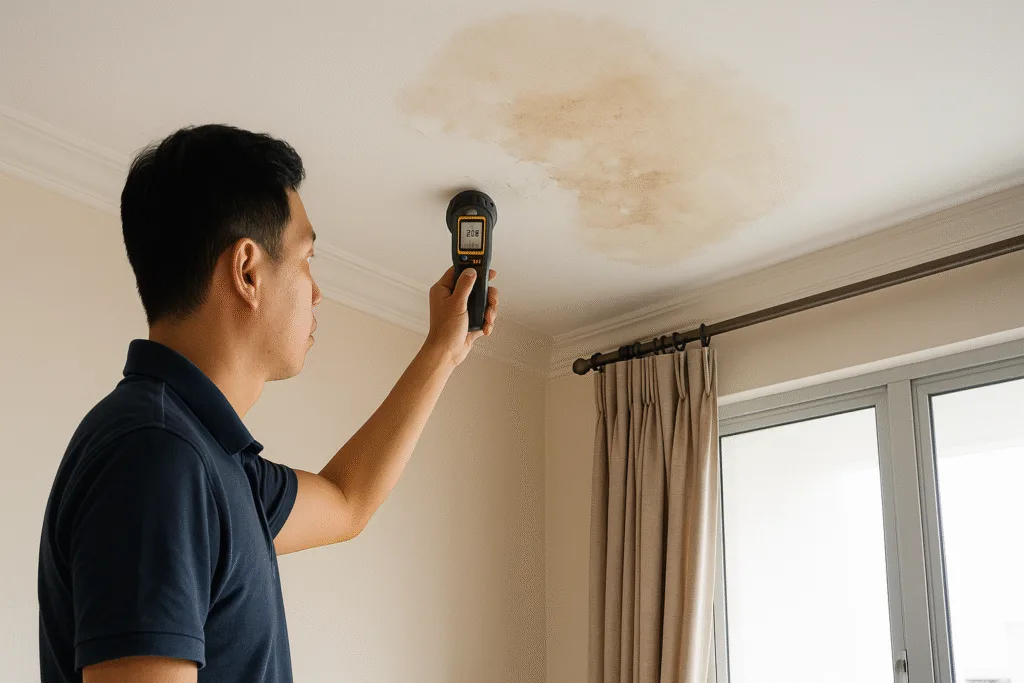
| 2 | Moisture Mapping | Use a surface moisture meter to detect dampness levels. |
| 3 | Thermal Imaging | Locate temperature differences that indicate hidden moisture. |
| 4 | Tracer Dye Test | Coloured water is poured in specific areas upstairs to track seepage routes. |
| 5 | Acoustic Leak Test | Sensors pick up sound waves from pressurised pipe leaks. |
| 6 | Confirmation & Report | Findings are compiled into a leak report — useful for insurance or HDB claims. |
This systematic approach prevents unnecessary hacking and accurately identifies whether the issue is waterproofing or plumbing-related.
DIY Checks Before Calling a Specialist
Before scheduling a full inspection, homeowners can observe a few simple indicators:
- Ask your upstairs neighbour if they notice any water pooling in their bathroom or balcony.
- Turn off their water temporarily to see if the leak stops.
- Check your own ceiling for temperature differences — cooler, damp patches often suggest ongoing moisture.
- Document photos over several days to monitor the spread.
While these steps won’t solve the problem, they help narrow down possibilities and save diagnostic time later.
When to Call a Professional
Call a leak detection or waterproofing expert when:
- The leak persists for more than 24–48 hours.
- You notice mould, bubbling paint, or sagging plaster.
- There’s no obvious pattern tied to usage upstairs.
- You’re in a dispute about cost responsibility (HDB or condo management may require a professional report).
Specialists like LEAK Works offer non-invasive tools and experience in working within Singapore’s building codes and HDB procedures — crucial when accessing neighbouring units or shared spaces.
Signs You Need Immediate Action
Ignoring early warning signs can escalate quickly. Look out for:
- Brownish ceiling stains that expand after rain.
- Persistent musty smell even with windows open.
- Paint blistering or small droplets forming overnight.
- Rust-coloured streaks or efflorescence on concrete ceilings.
- Electrical flicker or discolouration near ceiling lights.
In Singapore’s humidity, untreated dampness breeds mould within days, not weeks.
Health & Lifestyle Impacts
Beyond structural damage, ceiling leaks carry health risks. Fungal spores from mould thrive in damp areas and can aggravate allergies, asthma, and respiratory issues. Families with young children or elderly residents are especially sensitive.
A clean, dry ceiling also affects psychological comfort. Persistent leaks create anxiety about hidden costs and safety — a problem no homeowner should live with.
Cost & Repair Frequency in Singapore
The cost of fixing a ceiling leak varies widely depending on the cause and location:
| Type | Typical Cost Range (SGD) | Notes |
|---|---|---|
| Non-hacking waterproofing (chemical injection) | $400 – $900 | Fast, minimal disruption, ideal for mild seepage. |
| Full bathroom waterproofing (with re-tiling) | $1,500 – $3,500 | Permanent fix, but requires upstairs access. |
| Pipe leak repair (concealed pipe) | $600 – $2,000+ | Depends on wall hacking and pipe replacement. |
| Leak detection and report | $150 – $350 | Often reimbursable under property management. |
Frequency:
Waterproofing typically lasts 8–12 years before natural wear requires resealing. Pipes may last longer but fail due to corrosion or pressure stress. Regular inspection — especially before renovations or tenancy changes — helps avoid surprise leaks later.
Key Benefits of Professional Leak Detection
| Benefit | Description |
|---|---|
| Accuracy | Pinpoints leak source without unnecessary hacking. |
| Time-saving | Reduces guesswork and back-and-forth with neighbours. |
| Cost-effective | Avoids redoing tiles or repainting multiple times. |
| Compliance | Meets HDB/condo management reporting requirements. |
| Peace of Mind | Restores confidence in your living environment. |
1. How can I tell if the ceiling leak is my responsibility or upstairs?
If the water source is from the upstairs unit’s bathroom or balcony, it’s typically their responsibility. If it’s from shared plumbing or internal pipes, management or you may share the cost.
2. Can waterproofing be done without hacking tiles?
Yes. Non-hacking waterproofing methods using nano-coatings or injection sealants are common in Singapore. They’re faster and less intrusive.
3. How long does waterproofing last?
Good quality membranes or chemical sealants last around 8–10 years depending on maintenance and usage frequency.
4. What should I do before calling a leak specialist?
Take photos, identify the pattern of the leak (when it starts/stops), and coordinate with your neighbour for initial checks.
5. Does HDB cover ceiling leaks?
Under the HDB Goodwill Repair Assistance (GRA) scheme, HDB may co-share costs for ceiling leaks between neighbours, provided both parties cooperate.
6. Are ceiling leaks dangerous?
If moisture reaches electrical wiring or light fixtures, it can cause short circuits. Structural weakening and mould growth also pose long-term risks.
7. Can paint or patching fix a ceiling leak?
No. Painting only hides the symptom; the source must be fixed first — otherwise, stains and moisture will reappear within weeks.
Conclusion
A ceiling leak might seem small at first, but in Singapore’s vertical living spaces, it’s rarely just surface deep. Whether caused by upstairs waterproofing failure or a pipe fault, swift and precise diagnosis protects your home, your health, and your wallet.
If you notice suspicious dampness or stains, reach out to professionals like LEAK Works for expert inspection and targeted repair solutions. They’ll help you uncover the root cause — and restore peace of mind under your own roof.
发表回复