
Introduction
In a humid country like Singapore, where moisture easily seeps into walls, ceilings, and concealed pipes, detecting water leaks early is crucial. Modern technology now allows professionals to spot problems before visible damage appears. Two of the most effective methods — infrared thermography and moisture meter inspection — are transforming how Singapore homeowners and facility managers prevent costly repairs.
The Singapore Context
Singapore’s tropical climate is both a blessing and a challenge. The year-round humidity, heavy rain, and dense urban housing increase the likelihood of hidden leaks in HDB flats, condominiums, and commercial buildings. Air conditioning systems and water heaters also add to indoor moisture levels. With most pipes built behind walls or under tiles, early leak detection becomes an essential part of property maintenance.
Why It Matters
Unnoticed moisture doesn’t just cause stains or peeling paint — it can compromise structure, breed mould, and threaten indoor air quality. In offices, water infiltration can damage electrical systems and raise safety risks. Early leak detection using infrared thermography in Singapore helps property owners prevent these issues before they escalate.
Types of Leak Detection Technologies
| Method | Technology Used | Best For | Key Advantage |
|---|---|---|---|
| Infrared Thermography | Thermal imaging cameras | Hidden leaks behind walls or ceilings | Non-invasive, quick scanning |
| Moisture Meters | Electrical resistance or capacitance | Measuring moisture content in materials | Pinpoint moisture concentration |
| Acoustic Leak Detection | Sound sensors | Underground or pressurised pipes | Detects leaks by vibration or sound |
| Dye Testing | Coloured tracing dyes | Plumbing joints and fixtures | Visual confirmation of leak source |
How Infrared Thermography Works
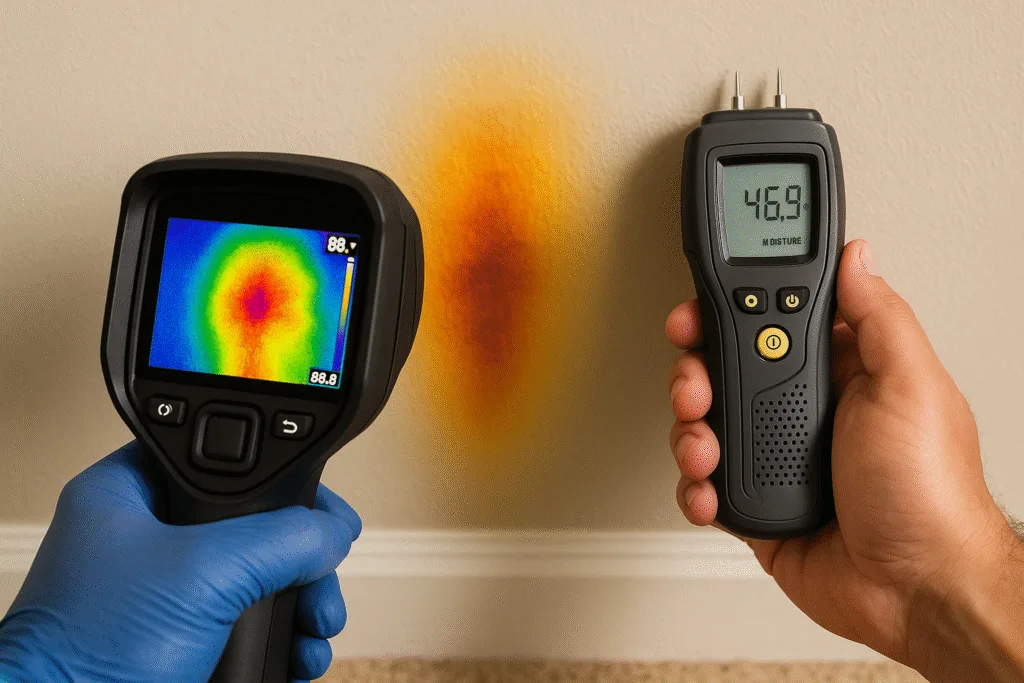
Infrared thermography uses heat-sensitive cameras to detect temperature variations on surfaces. When moisture seeps into walls or ceilings, it cools the area slightly — creating a visible “cold spot” in thermal imaging.
Professional technicians from LEAK conduct a systematic scan of the affected area. They interpret the infrared patterns to identify possible leaks without drilling or breaking tiles. This technology provides fast, accurate results, reducing guesswork and repair costs.
The Role of Moisture Meters
After identifying suspicious areas through thermography, experts use moisture meters to confirm water presence. These handheld devices measure the exact moisture content in materials such as concrete, plaster, or wood.
There are two main types:
- Pin-Type Meters: Insert small electrodes into surfaces for precise readings.
- Pinless Meters: Use electromagnetic fields for a non-destructive check.
Combining both ensures accuracy — a common practice among professional leak detection services in Singapore.
Step-by-Step: Professional Leak Detection Process
- Initial Assessment – The technician gathers information about visible damage, past repairs, and water usage.
- Infrared Thermography Scan – Surfaces are scanned for temperature variations.
- Moisture Meter Verification – Readings confirm water presence and extent of saturation.
- Leak Source Isolation – The technician narrows down to the affected area using complementary tools.
- Reporting & Recommendations – A detailed report outlines findings, photographs, and suggested repairs.
This combination of methods provides a holistic, minimally invasive solution for both residential and commercial clients.
DIY vs Professional Inspection
| Aspect | DIY Approach | Professional Service |
|---|---|---|
| Tools | Basic visual checks | Advanced thermography & calibrated meters |
| Accuracy | Limited | Highly accurate |
| Damage Risk | Higher (trial & error) | Minimal |
| Time | Often longer | Usually 1–2 hours |
| Cost | Cheaper upfront | Better long-term value |
While homeowners can use simple moisture detectors, professional inspections deliver precise, documented findings that prevent repeated repair costs.
Signs You May Need a Leak Detection
- Persistent musty smell even after cleaning
- Discoloured or bubbling paint on walls or ceilings
- Unexplained increase in water bills
- Mold spots forming near air-conditioning ducts
- Peeling laminate flooring or damp carpet edges
- Sudden loss of water pressure
If any of these appear, scheduling an infrared thermography inspection in Singapore can help locate the issue early.
Health, Efficiency, and Lifestyle Benefits
Early leak detection not only protects property but also improves well-being:
- Healthier Air Quality – Prevents mould growth and respiratory irritation.
- Energy Efficiency – Stops water from compromising insulation.
- Peace of Mind – Detects hidden faults without invasive renovation.
- Cost Savings – Minimises repair scope by identifying the root cause.
Cost and Frequency in Singapore
Professional leak detection in Singapore typically ranges from S$180 to S$500, depending on property size, accessibility, and number of affected areas.
Commercial properties or multi-unit inspections may be priced per square metre or offered in packages. Regular annual checks are common in condominiums and offices to prevent long-term water damage.
Key Benefits Summary
| Benefit | Infrared Thermography | Moisture Meter Inspection |
|---|---|---|
| Detection Speed | High | Moderate |
| Accuracy | Very precise with expert analysis | High for surface-level confirmation |
| Invasiveness | None | Minimal |
| Best Used For | Locating hidden leaks | Measuring moisture extent |
FAQs
1. Is infrared thermography safe for all surfaces?
Yes. It’s completely non-contact and doesn’t emit harmful radiation.
2. How long does a typical inspection take?
Most homes can be fully scanned within 1–2 hours.
3. Can infrared cameras see through walls?
No, they detect temperature differences on surfaces — not inside walls. However, temperature patterns often reveal hidden moisture paths.
4. When should I schedule a thermography inspection?
Right after water stains appear, or after plumbing or aircon leaks have been repaired to confirm dryness.
5. Are reports provided for insurance claims?
Professional services like LEAK offer detailed thermal images and readings suitable for documentation and claims.
6. Can I use a household infrared thermometer instead?
Those devices measure surface temperature but lack the sensitivity and resolution of professional cameras.
7. Do all leaks show in infrared scans?
No — extremely small leaks or those deep inside concrete may need additional testing such as pressure or acoustic methods.
Conclusion
Infrared thermography and moisture meter inspection have changed how leaks are detected in Singapore’s humid environment. Instead of relying on guesswork, property owners now benefit from science-backed precision and minimal disruption.
For dependable, professional service in leak detection and infrared thermography, visit LEAK — your trusted local partner for smart, non-invasive leak solutions.
发表回复