
1. Introduction
A musty odor that creeps into your home after every rainfall isn’t just unpleasant—it’s a quiet signal that something deeper is wrong. In Singapore’s humid tropical climate, this scent often points to hidden water intrusion or moisture build-up inside walls, ceilings, or flooring. Many homeowners try to mask the smell with air fresheners or dehumidifiers, but until the root cause is addressed, it always returns with the next downpour.
This article explores why musty odors appear after rain, how to identify their true source, and what waterproofing or leakage repair solutions actually work in Singapore homes.
2. Singapore Context
Singapore’s year-round humidity (often above 80%) and frequent rainfall create perfect conditions for mold and mildew growth. HDB flats, condominiums, and landed homes all face moisture challenges—but the risks differ:
- HDB flats often experience ceiling leaks from upper-floor bathrooms or external wall seepage.
- Condominiums may suffer from balcony or planter box waterproofing failures.
- Landed properties face roof membrane wear, gutter overflow, and underground seepage issues.
With most homes sealed for energy efficiency, trapped moisture lingers, creating that telltale musty smell—especially after rainstorms.
3. Why It Matters
A persistent musty odor isn’t just a minor annoyance. It’s a symptom of water damage that can lead to:
- Structural decay – Wet plasterboard, timber framing, and concrete can weaken over time.
- Health risks – Mold spores can trigger allergies, asthma, and respiratory irritation.
- Increased energy use – Damp air forces air conditioners to work harder.
- Reduced property value – Buyers are quick to notice “that smell.”
Ignoring the odor means allowing silent damage to spread. It’s a whisper from your home, asking for attention before the problem grows.
4. Types of Causes & Solutions
There are several common sources of musty smells after rain in Singapore homes, each with distinct repair methods:
a. Ceiling Leaks from Upper Floors
- Common in: HDB and condo bathrooms.
- Cause: Cracked waterproofing membranes or deteriorated sealing around floor traps.
- Solution: PU injection grouting, re-waterproofing, and surface resealing.
b. Roof Leaks and Gutter Overflow
- Common in: Landed homes, top-floor apartments.
- Cause: Aging roof tiles, loose flashing, or blocked downpipes.
- Solution: Roof membrane coating, flashing repair, and gutter cleaning.
c. External Wall Seepage
- Common in: HDB end-units or exposed condo façades.
- Cause: Cracks in external plaster or unsealed joints.
- Solution: Wall waterproofing coatings and joint sealant application.
d. Basement or Underground Water Intrusion
- Common in: Landed homes or commercial basements.
- Cause: Hydrostatic pressure pushing groundwater through foundation cracks.
- Solution: PU foam injection or crystalline waterproofing treatment.
e. Condensation Trapped Indoors
- Common in: Air-conditioned rooms with poor ventilation.
- Cause: Moisture accumulating on cold surfaces.
- Solution: Improve airflow, repair window seals, and install moisture barriers.
Professional leak detection teams like LEAK.WORKS use moisture scanners and thermal imaging to pinpoint the hidden pathways of water before they escalate.
5. Step-by-Step: Professional Process
Here’s how a typical waterproofing or leakage inspection process unfolds:
- Site Assessment – Technicians inspect visible damage, odor intensity, and moisture-prone areas.
- Leak Source Detection – Non-invasive tools like infrared thermography or moisture meters identify hidden damp zones.
- Testing & Tracing – Controlled water tests simulate rain to confirm the source.
- Treatment Plan – Based on findings, the team proposes solutions—PU injection, membrane replacement, or surface sealing.
- Repair Execution – Work is carried out with minimal disruption, followed by odor treatment or mold removal if needed.
- Post-Repair Verification – A second moisture scan ensures the leak is sealed for good.
By following this structured approach, specialists eliminate the cause of the musty odor, not just its symptoms.
6. DIY vs Professional
Some homeowners try quick fixes—applying anti-mold sprays or sealing cracks with silicone. While these might mask the smell for a while, they rarely address deeper waterproofing failures.
DIY approaches:
- Work only for minor surface mold.
- Risk sealing in trapped moisture.
- Lack the diagnostic accuracy to find hidden leaks.
Professional waterproofing services:
- Use industrial-grade equipment and certified materials.
- Target root causes without damaging your interior finishes.
- Offer warranties for lasting peace of mind.
When musty smells persist after every rain, DIY becomes a cycle of temporary relief. Professionals break that cycle.
7. Signs You Need Immediate Action
Your home might be sending subtle clues that moisture is building up:
- Musty or earthy smell after each rainfall.
- Discoloration or bubbles on paint and plaster.
- Damp patches that dry slowly even with sunlight.
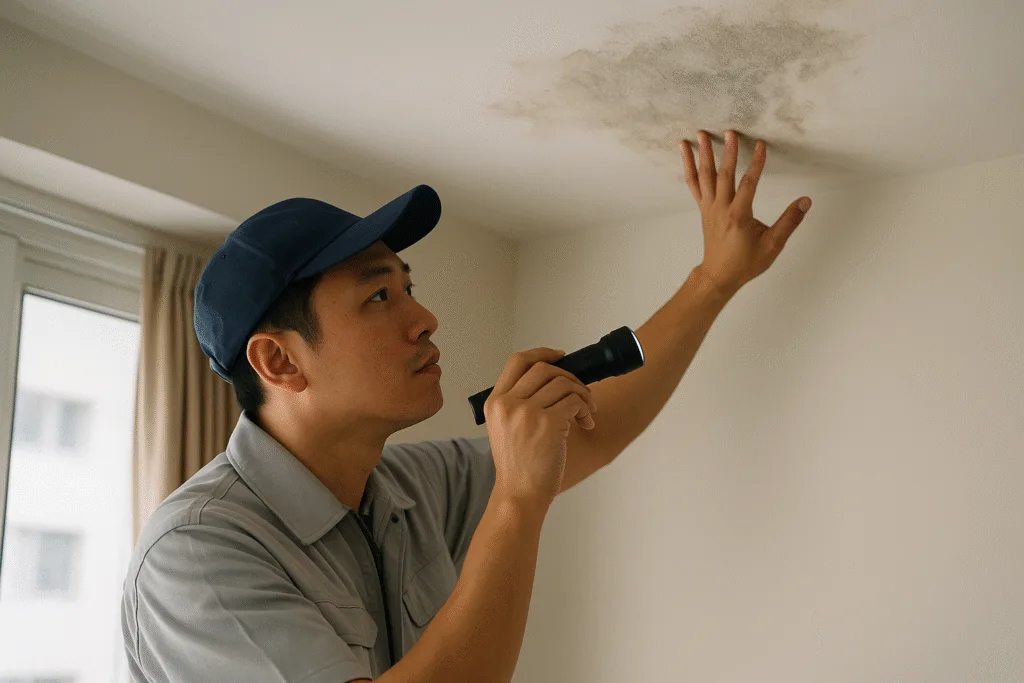
- Mold spots appearing near corners or ceilings.
- Peeling wallpaper or warped wooden skirting.
- Unexplained increase in indoor humidity readings.
If you notice two or more of these signs, it’s time to get a professional inspection before hidden damage spreads further.
8. Health, Efficiency & Lifestyle Benefits
Solving musty odor issues improves more than air quality:
- Healthier indoor air – Mold removal reduces allergens and respiratory triggers.
- Better comfort – A dry home feels fresher and cooler, even without blasting the aircon.
- Energy savings – Dehumidified rooms allow AC systems to run more efficiently.
- Longer lifespan for finishes – Paint, furniture, and flooring last longer in controlled humidity.
Addressing the source is an investment in well-being—not just a repair bill.
9. Cost & Frequency in Singapore
The cost of treating musty odors depends on the root issue:
| Problem Type | Typical Cost (SGD) | Common Property Types | Frequency / Notes |
|---|---|---|---|
| Minor ceiling leak repair | $250–$500 | HDB bathrooms | Once every 3–5 years |
| PU injection waterproofing | $600–$1,200 | Condos, landed homes | 5–8 years durability |
| Roof membrane re-coating | $1,000–$3,000 | Landed homes | Every 8–10 years |
| Wall seepage treatment | $400–$800 | HDB & condos | Check biannually before monsoon season |
Many homeowners choose annual inspection packages to catch early signs of seepage—especially useful before Singapore’s heavy rain months (November–January).
10. Key Benefits Summary
- Detect and fix hidden leaks early.
- Prevent long-term structural and health damage.
- Restore clean, fresh indoor air.
- Lower maintenance and aircon costs.
- Boost home comfort and property value.
A persistent musty odor is never just “a smell.” It’s your home alerting you to a silent leak beneath the surface.
11. FAQ
1. Why do I only smell the odor after it rains?
Because rainwater seeps into porous materials like concrete or plaster. When humidity rises, moisture activates trapped mold spores, releasing the odor.
2. Is it always mold causing the smell?
Not always. Sometimes, damp insulation or wood rot can produce similar odors. Proper testing distinguishes between mold and general moisture.
3. Can air purifiers remove the musty smell?
They can reduce odor temporarily but cannot eliminate moisture. Without sealing the source, the problem will return.
4. How long does waterproofing take?
Small-area treatments (like bathroom ceiling leaks) take one day; full wall or roof repairs may take 3–5 days.
5. How can I prevent musty smells from returning?
Ensure good ventilation, service your aircon filters, check for sealant wear, and schedule regular waterproofing inspections.
6. Is waterproofing covered by home insurance?
Some policies cover resulting damage but not the waterproofing work itself. Always check with your insurer for specific terms.
7. How do I know which contractor to trust?
Look for companies with leak detection technology, transparent pricing, and local case studies—like LEAK.WORKS, known for precision waterproofing across Singapore homes.
12. Conclusion
That stubborn musty odor after rain isn’t random—it’s a sign your home’s moisture defenses need attention. Singapore’s climate doesn’t forgive neglect, but with timely inspection and professional waterproofing, you can restore a clean, healthy indoor environment that lasts through every monsoon.
To learn more about lasting waterproofing and leak detection solutions, visit LEAK.WORKS today.
发表回复