
Introduction
Leaks rarely start in the middle of a roof — they begin at the edges. In Singapore’s tropical weather, where rain often blows sideways, water creeps into the tiniest gaps between walls, roofs, and joints. The unsung heroes preventing that are parapet upturns and flashings.
These are the small but vital details that keep water out where walls meet roofs or balconies. Yet, they’re also the most commonly neglected during construction or renovation. This guide breaks down why parapet upturns and flashings matter so much, how they fail, and what professional detailing — like that done by Leak Works — looks like when done right.
Singapore Context: Edge Leaks in a Humid Climate
In Singapore, rainfall is both heavy and frequent. Combined with constant humidity and strong wind-driven rain, any weak point in the building envelope becomes a leak path.
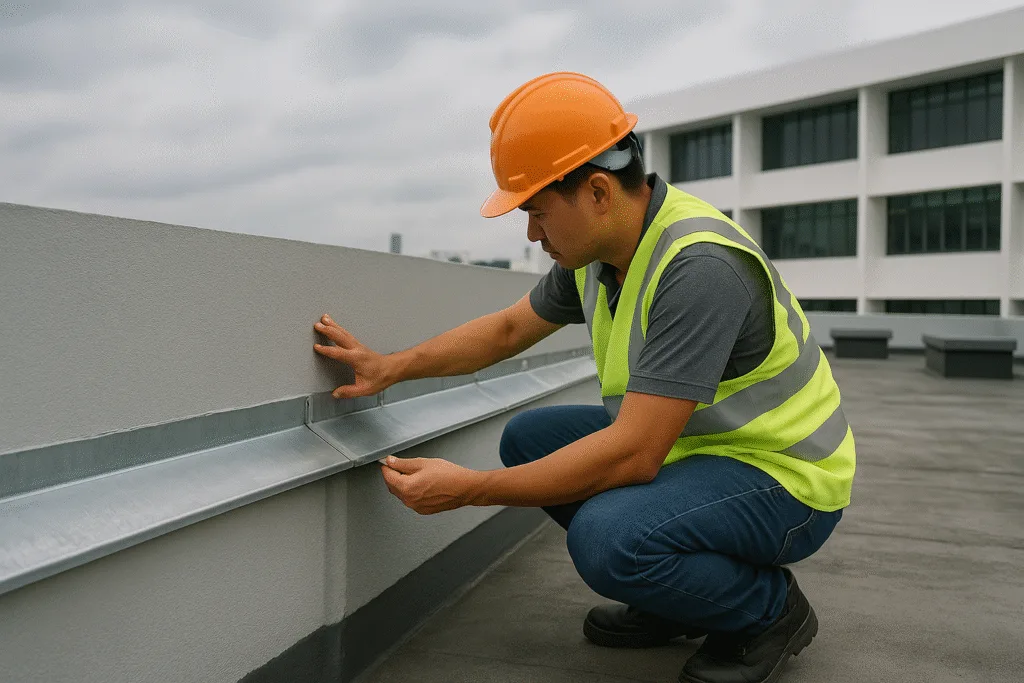
Parapets — the short walls that extend above roofs or balconies — are especially exposed. Water easily collects near their base, where roof waterproofing meets the wall. Without proper upturns (the vertical continuation of waterproofing) and flashings (protective metal or membrane capping), seepage starts.
Because many Singapore buildings are high-rise with flat or semi-flat roofs, edge detailing becomes even more critical. Once water enters through parapet joints, it can travel downwards, causing ceiling stains or wall blistering several floors below.
Understanding the Basics
What Is a Parapet Upturn?
A parapet upturn is the section of the waterproofing membrane that extends vertically up the parapet wall — usually 150mm to 300mm high. It prevents water pooling at the base of the wall from seeping into the structure.
Key functions:
- Acts as a continuous waterproof barrier between roof and wall
- Protects against wind-driven rain that runs up parapet surfaces
- Channels water safely toward drains
What Is a Flashing?
Flashing is a protective element — often made from metal, PVC, or flexible membrane — installed over joints and edges to deflect water. In roofs, it caps upturns and seals joints where different materials meet (e.g., concrete to metal, wall to roof).
Common types:
- Capping flashing — covers the top of parapet walls
- Base flashing — seals the base joint where roof meets wall
- Counter flashing — overlaps another flashing layer for double protection
Together, upturns and flashings form a watertight “edge armor” that keeps Singapore’s intense rain out of your home or building.
Why They Matter So Much
In waterproofing, 80% of leaks come from 20% of the surface — typically edges, corners, and joints. Upturns and flashings handle those stress points.
Without them, common issues include:
- Seepage behind wall plaster near parapets
- Stains or bubbling paint along roof edges
- Mould growth inside top-floor ceilings
- Corrosion of reinforcement bars (rebar) from trapped moisture
A correctly designed parapet upturn ensures continuity of waterproofing, while flashing shields the system from direct exposure to rain and UV rays.
Common Failure Points in Singapore Buildings
| Problem | Root Cause | Typical Sign |
|---|---|---|
| Cracked Parapet Wall | No waterproofing upturn or improper detailing | Water marks along wall edges |
| Detached Flashing | Thermal expansion loosens screws or adhesive | Visible gaps between metal and wall |
| Blocked Drain at Parapet Base | Poor slope or debris buildup | Standing water during rain |
| UV Damage to Membrane | Exposed waterproofing without capping | Brittle, peeling surface |
| Joint Leakage Between Parapet & Roof Slab | Missing secondary sealant layer | Persistent ceiling dampness |
When waterproofing fails at the parapet, leaks tend to appear far from the actual entry point — making professional detection essential.
Professional Detailing: How It Should Be Done
| Step | Detail | Description |
|---|---|---|
| 1. Surface Preparation | Clean parapet base and wall surface | Remove dust, laitance, and loose plaster |
| 2. Apply Primer | Ensures adhesion for membrane or coating | Select based on substrate type |
| 3. Form Upturn | Extend waterproofing membrane 150–300mm up parapet | Reinforce corners with mesh |
| 4. Install Flashing | Fix metal or flexible flashing over upturn edge | Use stainless steel or UV-stable PVC |
| 5. Seal Joints | Apply compatible sealant at overlaps | Ensure full coverage without gaps |
| 6. Test | Water ponding or spray test | Confirm watertight continuity |
Professionals like Leak Works perform all these steps using materials suited for Singapore’s heat and moisture exposure, ensuring both performance and durability.
Recommended Materials for Singapore’s Climate
| Component | Material | Benefit |
|---|---|---|
| Waterproofing Membrane | Polyurethane / Acrylic / Bituminous | High flexibility & adhesion |
| Flashing | Stainless steel / Aluminium / PVC | Corrosion-resistant, UV-stable |
| Sealant | Polyurethane or hybrid silicone | Expands with temperature change |
| Primer | Epoxy-based | Strong bonding on concrete surfaces |
Quality materials resist tropical wear — especially from the sun’s UV rays and frequent rainfall.
Case Study: Roof Parapet Leak in Bukit Timah
A landed home in Bukit Timah reported persistent ceiling dampness after multiple surface patch attempts. Investigation revealed no proper waterproofing upturn behind the parapet, and the capping flashing had corroded.
Fix:
- Remove damaged plaster and rusted metal cap
- Install new polyurethane membrane with 200mm vertical upturn
- Add stainless-steel capping flashing with sealed overlaps
Result:
Leak eliminated, roof lifespan extended by over 8 years.
DIY vs Professional Fix
| Aspect | DIY Attempt | Professional Service |
|---|---|---|
| Skill Required | Moderate | High (technical detailing) |
| Tools Needed | Brush, sealant | Torch-on, metal fabrication tools |
| Durability | 6 months – 1 year | 5–10 years |
| Cost | $100 – $300 | $600 – $1,500 |
| Risk | Incomplete sealing | Fully guaranteed system |
While minor re-caulking can be done at home, parapet waterproofing and flashing installation should always be handled by trained specialists — especially for high-rise buildings.
Cost Guide in Singapore
| Work Type | Typical Cost (SGD) | Frequency |
|---|---|---|
| Parapet Upturn Waterproofing | $400 – $800 | Every 5–8 years |
| Flashing Replacement | $600 – $1,200 | Every 8–10 years |
| Full Roof Parapet Rework | $1,000 – $2,000+ | 10-year lifespan |
Costs depend on parapet length, roof accessibility, and materials used. Stainless steel flashings, though costlier, offer the best long-term value in Singapore’s humid and coastal climate.
Maintenance Tips
- Inspect parapet and flashing joints before monsoon season.
- Clear leaves and debris from roof edges and drainage points.
- Check for rust or detachment of metal caps.
- Reapply sealant when cracks appear — don’t wait for leaks.
- Schedule full inspection every 3–4 years for older roofs.
Preventive maintenance is always cheaper than re-waterproofing after leaks appear.
Benefits of Proper Parapet & Flashing Design
- Leak Prevention: Eliminates water entry at wall-roof joints
- Extended Roof Life: Reduces exposure and moisture stress
- Lower Maintenance Cost: Fewer patch repairs over time
- Improved Aesthetic: Neat, clean edges that resist staining
- Better Structural Integrity: Keeps internal reinforcements dry
In Singapore’s relentless rain and sun, parapet detailing is a small investment with big returns.
FAQ
1. What is the ideal upturn height for parapet waterproofing?
Generally 150–300mm above the finished roof level, depending on expected rainfall intensity.
2. Can I waterproof a parapet without flashing?
Possible but not ideal. Flashings protect membranes from UV exposure and extend their lifespan.
3. What’s the most common cause of parapet leakage?
Improper sealing between roof waterproofing and the vertical parapet wall.
4. Can existing flashings be repaired instead of replaced?
Yes, if corrosion is minor and joints can be resealed. Replacement is needed when metal warps or cracks.
5. How long does parapet waterproofing last?
Typically 5–8 years for coatings, and up to 10 years with proper flashing protection.
6. Are parapet leaks covered by building maintenance contracts?
In many condos and HDB flats, external waterproofing falls under MCST or Town Council maintenance scope.
7. Who should I contact for recurring parapet leaks?
Professional waterproofing contractors like Leak Works who can assess and repair both membrane and flashing systems.
Conclusion
Waterproofing isn’t only about large surfaces — the details make the difference. Parapet upturns and flashings might look minor, but they’re the critical joints that keep your home dry through Singapore’s tropical downpours.
When properly designed and installed, these edge protections extend the lifespan of your roof, reduce maintenance costs, and safeguard your property value.
For expert inspection, parapet waterproofing, and flashing repairs, visit Leak Works — Singapore’s trusted specialists in long-lasting leak prevention.
发表回复