
Introduction
In a dense urban environment like Singapore, water and gas systems are constantly under pressure—literally. Whether you live in an HDB flat, a landed property, or manage an office unit, even a small leak can cause a surprising amount of damage. Beyond wasted resources, leaks contribute to higher utility bills, mould growth, and long-term structural problems.
This guide explores the top five ways to check for leaks in Singapore, combining simple DIY inspections with professional techniques trusted by specialists at Leak Works.
Singapore Context: The Urban Pressure Factor
Singapore’s compact housing layout, humid climate, and reliance on high-rise plumbing systems make it particularly prone to leak-related issues.
- Humidity accelerates corrosion in metal pipes.
- Concrete buildings often conceal plumbing lines, making leaks harder to detect until they show up as damp patches or peeling paint.
- Water tariffs are among the highest in Southeast Asia, so unnoticed leaks can quickly translate into hefty PUB bills.
In commercial spaces—especially older shop houses or central business offices—air-conditioning condensate leaks and roofing seepage are common, particularly during the monsoon season from November to January.
Why Leak Detection Matters
Leaks are not just about dripping water. They signal stress in your plumbing or waterproofing system.
Unchecked leaks can lead to:
- Ceiling or wall stains that lower property value.
- Hidden mould growth that can affect respiratory health.
- Compromised structural integrity in older buildings.
- High water consumption penalties from PUB.
Whether you’re a homeowner or a facility manager, regular leak checks are part of responsible maintenance—and often save more than they cost.
1. Visual Inspection and Meter Monitoring
The simplest and most cost-effective method starts with your eyes and your water meter.
Steps:
- Turn off all taps and water-dependent appliances (washing machine, water heater, dishwasher).
- Check your water meter—usually located near your main gate or service yard.
- Note the reading, wait 30 minutes to an hour without using water, and check again.
- If the reading changes, water is escaping somewhere in the system.
Common visual signs:
- Damp or discoloured walls, especially near bathrooms.
- Peeling paint or swelling skirting boards.
- Unusual hissing sounds behind walls or floors.
In Singapore’s HDB flats, leaks often appear first in bathrooms and kitchen ceilings shared between units. PUB provides joint inspections for inter-floor leaks, but homeowners should start with this self-check.
2. Dye Test for Toilet and Drain Leaks
Toilets are a notorious source of hidden leaks. A running cistern can waste litres of water daily.
How to do a dye test:
- Remove the tank lid and add a few drops of food colouring or a leak detection dye tablet.
- Wait 10–15 minutes without flushing.
- If coloured water appears in the bowl, you have a flapper valve leak.
This quick test also works for checking floor trap seepage. Pour coloured water into the drain and observe the ceiling below (if possible). In condo or commercial units, maintenance teams often use this technique before more complex pressure testing.
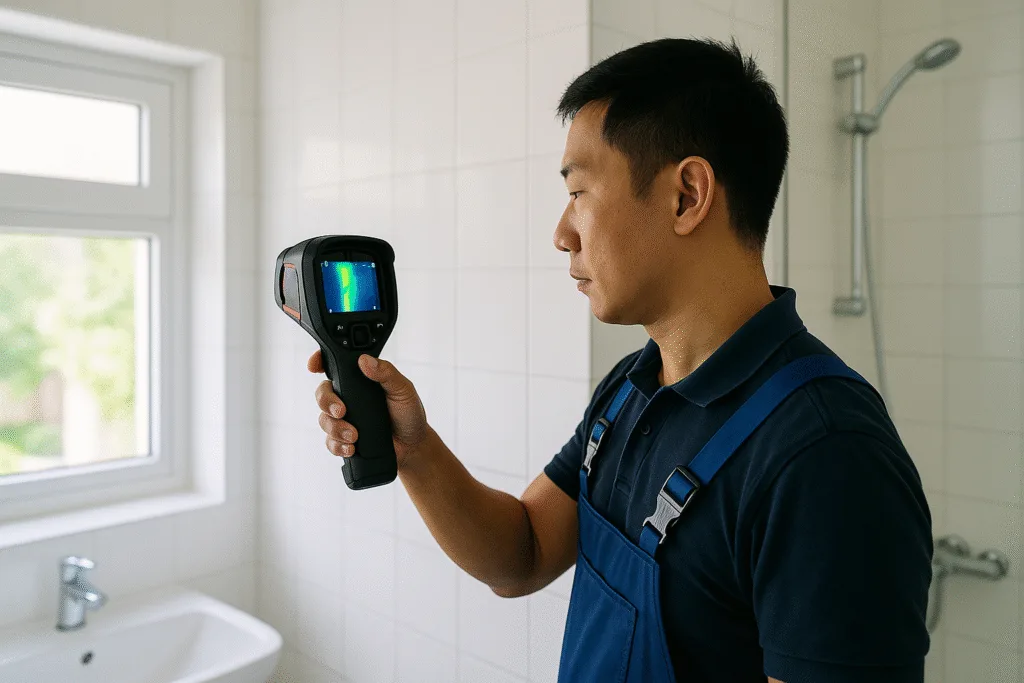
3. Infrared and Thermal Imaging Detection
When visual clues are scarce, professionals use infrared cameras to detect temperature differences caused by moisture accumulation behind walls or ceilings.
Benefits:
- Non-invasive: No need to break tiles or walls during the inspection.
- Precise: Identifies the exact location and spread of the leak.
- Efficient: Speeds up repair work by narrowing down the target area.
Infrared leak detection is particularly effective for air-conditioning pipe leaks, roof seepage, and concealed bathroom plumbing—common challenges in Singapore’s high-rise buildings.
Companies like Leak Works specialise in using advanced imaging tools calibrated for local humidity and temperature ranges.
4. Pressure Testing and Acoustic Detection
Plumbing professionals frequently conduct pressure tests to determine whether your water or gas lines maintain integrity.
Pressure Testing:
- Involves sealing a section of pipe and applying controlled pressure.
- Any drop in pressure over time indicates a leak.
- Often used before renovation or after waterproofing work to ensure system reliability.
Acoustic Detection:
- Uses ultrasonic listening devices to pick up the faint sounds of escaping water or gas.
- Especially useful for underground or concealed pipe networks.
- In Singapore’s landed properties, this method helps locate leaks beneath driveways or garden areas without excavation.
These techniques are highly reliable but should only be handled by certified technicians to ensure safety and accuracy.
5. Moisture Meters and Hygrometers
A moisture meter measures water content within walls, floors, or ceilings.
A hygrometer measures relative humidity in the air—useful for identifying damp rooms that may harbour slow leaks or poor ventilation.
How they’re used:
- Press the sensor probe against the surface to get an instant reading.
- Compare multiple spots to determine patterns of dampness.
- Professionals record these readings to monitor moisture over time, especially after waterproofing or leak repair.
These tools are particularly valuable in Singapore’s basements, storerooms, and air-conditioned areas, where condensation and leaks often overlap.
DIY vs Professional Leak Detection
| Aspect | DIY Methods | Professional Services |
|---|---|---|
| Cost | Low to free | Moderate, depends on scope |
| Tools Needed | Basic (dye, torch, water meter) | Advanced (thermal, acoustic, pressure) |
| Accuracy | Limited to visible leaks | Detects concealed and micro leaks |
| When to Use | Early signs, simple checks | Persistent damp, high bills, or ceiling stains |
For quick checks, DIY is sufficient. But if you suspect a concealed leak, calling a specialist like Leak Works ensures a thorough and non-destructive investigation.
Signs You Might Have a Hidden Leak
- Sudden spike in your PUB bill.
- Persistent musty odours or visible mould.
- Warm floor tiles near water heaters or bathrooms.
- Constant running sound from the toilet.
- Discolouration on ceilings below wet areas.
- Reduced water pressure in multiple taps.
If any of these appear, document them with photos before calling a technician—helps with warranty or insurance claims later.
Health, Efficiency, and Lifestyle Benefits
Prompt leak detection has wider benefits beyond saving water:
- Health: Reduces mould spores that can aggravate allergies or asthma.
- Efficiency: Prevents water heater or pump overuse, lowering electricity costs.
- Comfort: Keeps indoor humidity balanced, protecting furniture and electronics.
- Sustainability: Supports Singapore’s “Water Smart” initiative by cutting unnecessary water loss.
Cost & Frequency of Leak Checks in Singapore
The price of a professional leak inspection varies depending on property type and method used:
| Property Type | Inspection Type | Typical Cost (SGD) |
|---|---|---|
| HDB Flat | Basic visual + moisture scan | $120 – $180 |
| Condominium | Infrared thermal imaging | $180 – $250 |
| Landed Property | Full pressure + acoustic test | $250 – $400 |
Recommended frequency:
- Residential: every 12–18 months.
- Commercial: every 6–12 months, especially in air-conditioned offices or F&B outlets.
Many homeowners also schedule a check before resale or renovation—preventing disputes over hidden water damage.
Key Benefits Summary
| Benefit | Description |
|---|---|
| Prevent Costly Repairs | Early detection stops small leaks from damaging walls or flooring. |
| Save on Utility Bills | Catch water wastage before PUB surcharges hit. |
| Maintain Property Value | Dry interiors and clean ceilings appeal to buyers. |
| Improve Indoor Air Quality | Reduces humidity and mould growth. |
| Peace of Mind | Knowing your plumbing is leak-free helps you plan maintenance confidently. |
FAQs: Leak Detection in Singapore
1. How do I know if my ceiling leak is from my upstairs neighbour?
If you live in an HDB, report it to the town council or PUB. Joint inspections can trace the leak source accurately.
2. Is leak detection covered by home insurance?
Some policies cover the damage caused by leaks, not the inspection itself. Check your policy details or talk to your insurer.
3. Can I use leak detection dye for floor or wall cracks?
Yes, but it works best in plumbing systems. For structural leaks, opt for thermal imaging instead.
4. How long does a professional leak inspection take?
Typically 1–3 hours, depending on property size and number of water points.
5. Is it safe to perform a pressure test myself?
No. Improper use can burst pipes or cause injury. Always leave it to licensed plumbers.
6. Are leak detection services available after office hours?
Yes, many local companies, including Leak Works, offer 24/7 emergency callouts.
7. Can small roof leaks fix themselves?
Rarely. Tropical rains often worsen minor cracks over time—prompt sealing is best.
Conclusion
Leaks are small problems that turn into big ones if ignored. A proactive inspection—whether visual, dye-based, or thermal—keeps your home or business safe, dry, and efficient.
In Singapore’s humid, high-density environment, partnering with a trusted local expert like Leak Works ensures accurate detection and long-term solutions, saving you both money and stress down the road.
发表回复